
Mamdouh Bitar, Ruba Mansour:
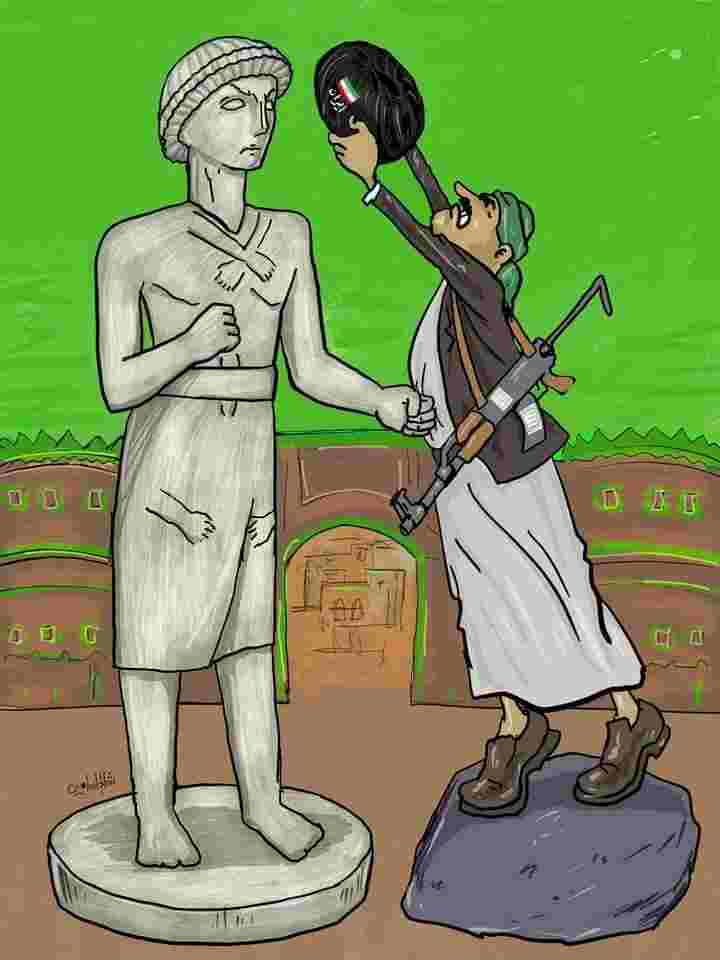
The concept of leadership varies from one society to another. It is useful and beneficial to explore this concept within the Arab context, as this context is of primary concern to us. Within the Arab context, it can be said that the intellectual and behavioral structure translates Bedouinism, pastoral society, and the concept of leadership in this region. Pastoral Bedouinism, and consequently the concept of leadership, are characterized by many characteristics and features, the most important of which are the phenomenon of denial and the inability to see negatives, then the failure of self-criticism and ignoring reality and reversing it from bad to good through fabrication, then manifestations of boasting, arrogance, conceit, and conceit. Pastoral culture, by definition, does not allow for the practice of objectivity. There is no declaration of weakness, no admission of defeat, and no declaration of admission of error. Bedouinism is infallible. Pastoralism, the flock, and the shepherd are the Arab leader, who is infallible and always right. The Bedouin Even in his plunder and looting, he is right, because he is stealing what originally belongs to him, and what his sword can accomplish in this field. The Bedouin, the Arab leader, does not self-criticize or apologize, because self-criticism and apologies are humiliating. The Arab leader is like the Arab person and, consequently, Arab society. The collective Arab mind, that is, the mind of the flock, is no different from the mentality of the shepherd. The shepherd is a leader, and the flock is the reservoir of leaders and leaderships and the factory for their production. They are all leaders. Here we remember what the late Shukri al-Quwatli said about the Syrians in 1958… They are all presidents of the republic. The pastoral Bedouin mind, that is, the Arab leaderships, refuses to practice analysis and deconstruction, because analysis and deconstruction go in the opposite direction of Bedouin categorization, which only recognizes the credibility of the sword, which separates life from death. The sword is one of the requirements of Bedouin pastoral life. It is the source of livelihood and one of the requirements of leadership. With the sword and violence, they plunder and defend their stolen goods. And due to their habit of sword culture, they practice bloody fighting and conflicts, sometimes as a sport and hobby. Therefore, manifestations of strength, extreme bravery, and boasting of violence are characteristics of the Bedouin culture that filter into urban life in these societies, and dominate urban culture. Thus, peoples have evolved in reverse. Logically, urban culture should dominate Bedouin culture, which is based on many foundations, including the equation of elevating one’s self-esteem and devaluing the other. The mere presence of the other was tantamount to a threat, so the other must be eliminated by any means, such as exclusion and non-recognition of his existence. The Bedouin’s respect for himself is a translation of the other’s respect for him, and the other’s respect for him means nothing but the other’s submission to him. The Bedouin’s system of virtue does not stem from within him, but rather from others’ perception of him through the duality of his loftiness and their decline. The Bedouin does not look within himself, but rather at his image in the mind of others. It is a hideous act of ignorance to hide behind people’s assumptions about you, an assumption dictated by Your dominance over them, their fear of your sword, and their dependence on the crumbs of your bounties—these are the characteristics of Arab leaders, and even Arabs in general. The manifestations of pastoral Bedouinism, i.e., leadership, are not limited to what has been mentioned. Leadership is addicted to the sword and violence, which the Bedouin mind considers a salvation, a savior from the state of destitution in which the flock lives. The shepherd-flock mentality in this region has transformed the human being into a mere “tool” awaiting the shepherd to receive his reward. The reward is a favor from the shepherd, and rights in this case are granted, not acquired through the sweat of one’s brow. The sweat of one’s brow is free, for the sake of the shepherd’s mustache. The rights of the citizen are linked to the shepherd’s favors, not to the state’s duties toward the citizen. This state of affairs, framed by the aura of generosity, establishes a change in the formulation of rights, from a formula of acquired rights to a formula of granted rights. Formulas that are not subject to the concept of justice or law, a formula that deceives and deceives, the deceptive shepherd’s illusion that he is devoted to the sake of others. The deceived one among the subjects is led to believe that he has obtained his rights, which are represented by his satisfaction. Satisfaction is one thing and rights are something completely different. The Bedouin mentality revolves around violence, the sword, and the mentality of the shepherd – the subjects, and the transformation of man into a mere tool waiting to obtain his rights in the form of granted favors (the halo of giving) by virtue of generosity and liberality, and not by the concept of duties and rights.The state framed by the aura of generosity gives the shepherd the illusion that he is fulfilling his duties to the fullest, and the flock the illusion that they have attained their rights. This is a relationship of deceit and deceive, that is, a culture of bestowed favors, not acquired rights. Then we want to leapfrog over tribe, clan, and sect to the state of citizenship. What do we have to leapfrog over? Can the culture that has brought us to this decline save us from the decline it has caused and produced? The Bedouin pastoral mindset imposed a system of governance that has no connection to the philosophy of the state. Even classifying those who rule and control us as pre-state is unfair to the concept of pre-state. We are in the stage of pastoral nomadism, which cannot establish a state. Rather, at best, it is a tribe alongside other tribes that fight and plunder each other. There is no escape for Bedouins from the plundering we call corruption. Corruption is not exclusively the work of the shepherd, but rather the work of both the shepherd and the flock, i.e., the work of Bedouinism, which represents everyone. Anyone who contemplates the Arab-Islamic situation is struck by frustration. The only Arab achievement, and the skillfully crafted one, was fragmentation. In addition to the Arabs’ resistance to everything that was progressive and scientific, there are entities that have regressed from the pre-state stage and have reached the level of clans and tribes. All of this occurred within the shadow of an Arab Muhammadan culture. All of this failure and deterioration did not prevent some from demanding that our minds be hybridized with an Arab Muhammadan one, because this culture, in their view, represents a type of fate and destiny. .. Whether we like it or not!! The paradox here does not lie in fatalism and in accepting the catastrophe, setback or deterioration with a spirit of surrender and by dying voluntarily and without any resistance, but rather lies in the preaching that hybridizing the mind, i.e. manufacturing the mind as an Arab Muhammadan one, will be the savior. The intelligence of these people has forgotten that the mind has originally and for centuries been manufactured locally, and our current situation is a product of these minds. Our current situation did not fall from the sky, nor is it the creation of Satan, nor the creation of the God of the universe. It is our creation and the creation of our pastoral Bedouinism, which has occupied even our cities and turned us into Bedouins without migration, Shawiya without a desert, urban dwellers with stone tents.