
Mamdouh Bitar ,Othman Li
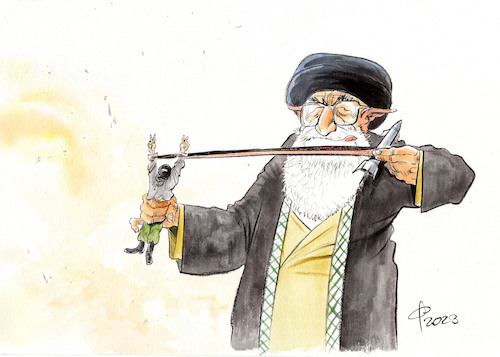
The phenomenon of terrorism, based on a certain intellectual and behavioral pattern, known as “extremism,” is spreading primarily in Muslim societies and among Muslim communities in other countries, especially Western ones. This characteristic manifests itself primarily during youth, particularly after the end of a fragile, anxious adolescence, which is a time of searching for the essence of the life they desire for themselves and their fellow Muslims.
Extremism is most prevalent among the poor, despite the fact that there is no study proving that an extremist or terrorist is necessarily poor. Not every poor person is a terrorist, and the perception of poverty or the feeling of poverty does not necessarily mean that the person who perceives it is truly poor
The association of Salafism or fundamentalism with extremism or terrorism, as a product of extremism, is an indisputable fact. Furthermore, the relationship between extremism and terrorism and specific intellectual sources, such as Wahhabism, Ibn Taymiyyah, al-Ghazali, and others, is beyond doubt. There is also no doubt that there is a relationship between the concept of monotheism, terrorism, and extremism. Monotheism, with the goal of purifying religion from allegiances, and monotheism with the political goal of spreading the sovereignty of God and His Messenger, both of which, in most cases, necessitate the use of violence in its terrorist form. Furthermore, there are other concepts, such as loyalty and disavowal and the “best nation,” which are implicated in the production of terrorist extremism. Loyalty and disavowal, in its exclusionary and inclusionary interpretations, clearly dominates the inclusionary interpretation, and thus hostility toward others predominates. The concept of “best nation” is no less disruptive than the concept of loyalty and disavowal in its distortion of the relationship with others, who become targets of hatred, hostility, rejection, and exclusion, especially when others object to this superior classification. The principle of validity for all times and places, and the fundamentalist Salafists’ rejection of restricting religion, its scriptures, and its verses to a specific historical context, has been a sure source of terrorist extremism. Salafism considers restricting religion and its rulings to a limited historical context to be nothing more than removing religion and its rulings from their eternal validity. This creates a contradiction that leads to crisis, tension, and ultimately terrorism. The concept of the abode of faith and the abode of disbelief also creates discord with others, which develops into a crisis in the relationship with others, and ultimately leads to resorting to the sword and knife to resolve the matter and subjugate others. In addition to all of this, there is the concept of the “superior” Muslim, which represents the most logical mechanism in the process of assigning roles to the extremist who commits the terrorist act. The terrorist act is the result of the combination of the “perpetrator” of the operation and the “ideological background” that represents the true perpetrator of the terrorist act. The true perpetrator practices double terrorism; he, in a way, terrorizes the perpetrator of the operation and turns him into a victim alongside the other victims of the operation. It is also the terrorism of the terrorist
As for why some young people adopt extremist terrorist practices? There are many approaches that can perpetuate extremism and terrorism, such as approaching terrorism with the low social status of some, which is considered a very important factor regarding the concept of the “Supreme Muslim.” The group rehabilitates the socially degraded and deteriorating by providing them with the attribute of the “Supreme Muslim.” Often, this socially deteriorating individual is a drug or alcohol addict, or a former prisoner for crime or assault. Providing them with the “Supreme Muslim” award represents compensation for their shortcomings, while on the other hand, it transforms them into a slave under the command of the group that has qualified them for the “Supreme Muslim” award. This person becomes an executor of any action or operation requested by the group. The execution of a terrorist act is based primarily on obedience to the group, not on the conviction of the individual carrying out the terrorist operation! There is a religious approach to terrorism. Jihad is a pillar of Islam, and its manifestations are almost exclusively limited to the practice of violence based on a strict jurisprudence. Interpreting many verses and hadiths in a way that perpetuates terrorist extremism is very easy. No terrorist operation has ever lacked a suitable fatwa supported by a verse, hadith, or religious tradition. There is a social approach to terrorist extremism. This approach is not exclusively Islamic, and is based on other ideas or concepts related to the social status of the victim and the terrorist, within conditions and a context conducive to the practice of terrorist extremism. Here, terrorist extremism seeks to establish a new life free of exploitation, marginalization, and inferiority, and based on the belief in the right to build social relationships that secure a status for the terrorist and the group commensurate with their assessment Guardians of the matter are from the people of disbelief, who push people to practice terrorism according to the classification of people as believers or disbelievers. themselves and others…for example, “the best of authority from among the people of disbelief!”
The atmosphere that was founded on the concept of the clash of civilizations, especially the inevitable clash of the Muhammadan heritage with Western civilization, played a not insignificant role in consecrating extremism and hostility that spawn terrorism. This is in addition to the feeling of inferiority of the “ego” and of victimi zation on the basis of identity. There is an oppressive identity and an oppressed identity
The goal of terrorist extremism in this case is to correct this imbalance. For a long time, the individual was the only terrorist, but in recent years, terrorism has taken on collective organizational forms, such as the terrorism of ISIS, Al-Nusra, and many other armed religious factions in Syria and outside Syria. Terrorism has evolved from the individual to the institution, which includes state and group terrorism as organized institutions. Structural changes in the terrorism system were accompanied by new manifestations, including spectacles such as beheading in front of the camera, or dressing victims in orange jumpsuits as a symbol of Guantanamo prisoners, or the emphasis on Salafist consecrations such as dealing with female captives by selling them, as happened with Yazidi women and others in areas that were under the control of some armed factions. This is based on intellectual principles that aim to revive the practices of the righteous predecessors, from a background of the validity of the predecessors’ methodology for the present and the future.