
samir sadek,ruba mansour:
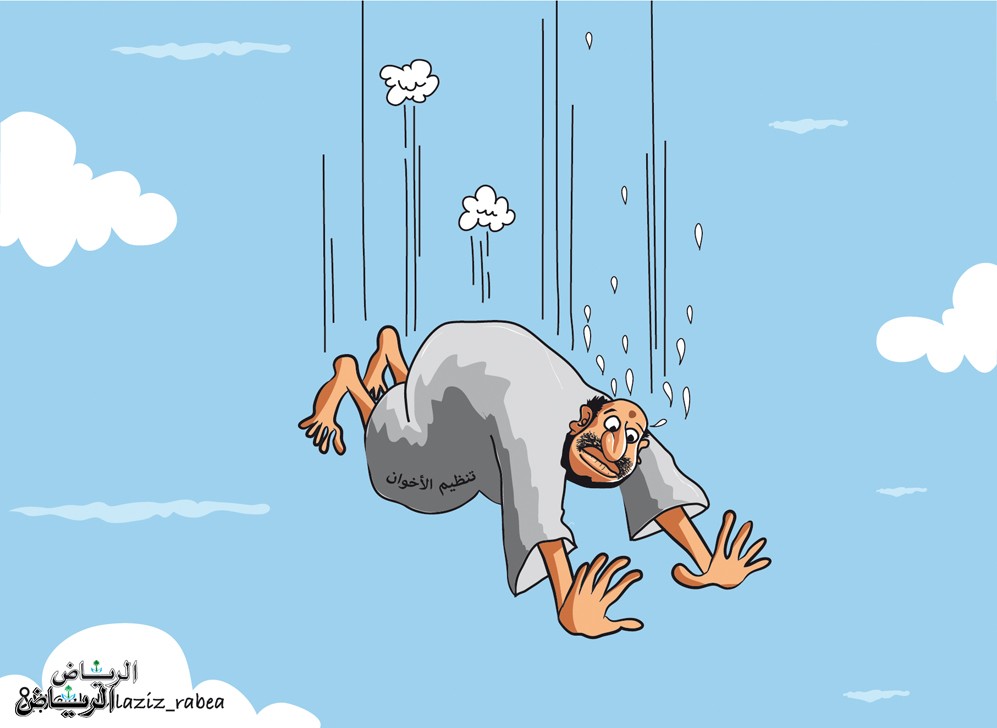 The claim that religion creates civilizations is baseless, because religions are not meant to create civilizations. The first civilizations of many peoples existed before religions, such as the Assyrian, Akkadian, Syriac, Pharaonic, Roman, Greek, and others. The same applies to language, which represents a “consumer” commodity. Its value is related to its benefits, which relate to the benefits it carries and the benefits it conveys to the consumer.
The spread of Arabic was linked to the Arab invasion coming from the barren desert. The spread of Arabic varied from place to place. Nubia was invaded, but it did not abandon its language, as did the Egyptians, who spoke Coptic and Greek before the invasion. Some church rituals were even spoken in Greek, which was the universal language of the time. Gradually, the Egyptians abandoned their Coptic language in favor of Arabic.
How was the Arab colonial invasion able to wipe out the language of the entire Egyptian people, a people who once had a civilization? It is deeply rooted and distinct among the world’s civilizations and a language used in daily life and dealings, just as many peoples have preserved their languages for thousands of years and their languages have not become extinct? It’s difficult to answer this question. For example, a country like Sassanid Iran was not affected by the Arab invasion, although recent National Geographic genetic research indicates that 56% of the Iranian people are of Arab descent.
Despite this, they rejected the Arabic language, due to their sense of Persian nationalism, Persian populism, and their sense of distinction from the Bedouins of the Arabian Peninsula. They accepted the religion but not Arabic! Iran retained a Persian nationality and identity. Even their names remained Persian, and street names, signs, and stores were written in Persian. Even during the conquest of India, Afghanistan, and Indonesia, which represents the largest congregation of Muhammadans in the world, they did not abandon their Indonesian language or their national identity, and they did not speak Arabic. In India, there are more than 22 official languages and local dialects, fifteen gods, and approximately 30 beliefs.
Sultan Mahmud of Ghazni invaded it, occupied its temples, and killed millions of its people. However, the Hindus never spoke Arabic, even after the fall of the Byzantine Empire at the hands of the Hindus. Mehmed the Conqueror and the fall of its capital, Constantinople, in 1453. Massacres were perpetrated against its inhabitants, despite their refuge in churches. Women were taken captive for pleasure, and the aaya Sophia and most of Constantinople’s churches were converted into mosques. The remaining inhabitants of Byzantium never spoke Arabic, despite it being the language of the Qur’an. The rejection of Arabic reached an extreme form during the reign of Atatürk. Even in the modern era, Adnan Menderes was executed in 1961 on charges of plotting a coup against secularism, because he restored the permission for the call to prayer to be recited in Arabic.
The Arab invasion was on the verge of entering Europe during the Battle of Poitiers or the Battle of Tours in 732. The invaders succeeded in penetrating Europe, but the Arabic language did not enter with them. They did not create a civilization there, as they claim. Otherwise, they would have established one in Mecca and Medina before their invasion of Europe! The occupier does not create civilization, but rather sits on the ruins of the indigenous peoples’ civilizations. Regarding language, the Spanish did not speak the language of the occupying Arabs, thus preserving their identity and nationalism. The new religion entered the Balkans at the hands of the Ottomans. After fierce wars during which the Ottomans lost most of the lands they had conquered in Europe, the religion remained there like a time bomb until the war in Bosnia and Herzegovina and Serbia erupted, claiming the lives of large numbers of the Balkan population. Bosnian remained the official language of the Bosniaks, which is similar to Serbian and Croatian. They never spoke Arabic.
Did this contribute to preserving their identity? The situation is different in Egypt, the Levant, and some other regions, which were violently Arabized in most cases. Even in these regions, the importance of indigenous languages such as Kurdish, Berber, and even local dialects is currently rising! The political status of many rigion and the status of Pharaonic Egyptian culture have risen, and in the Levant there is much talk about Syriac and disgust with Arabism and its symbols is increasing at a very rapid pace.
UNESCO assessed Arabic years ago as a language heading towards extinction, the reason being its trivial burden. Did Arabic and Arabism return to the peninsula empty-handed?