
ma bitar ,ruba mansour :
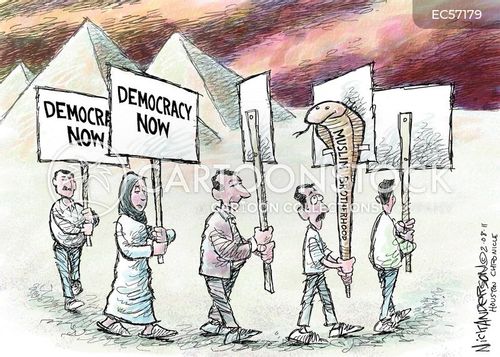
The Ba’ath initially came through the military, which mutated and mutated until it finally fell into the arms of the immortal leader. Islam came to our country, let’s just say it more broadly, through the immortal son of Walid Khalid. In both cases, there was violence, and control was achieved with the sword and the gun.
The Ba’ath quickly degenerated into a privileged class that monopolized theft, similar to the theft of the spoils of war, which was the primary motivation for conquests. Both reduced human rights to a minimum and established a class system to the maximum. Consequently, the gap widened between the privileged Ba’athists and the rest of the people. The Caliphate discriminated between the people, as stated in the Covenant of Umar, whose essence is similar to the essence of Article 8 and the essence of many other verses.
From the beginning, the Baath was an occupying power that waged war on the country, colonized it, and drained its resources. The Caliphate was nothing but that. After 50 years of Baathist occupation and fourteen hundred years of Arab-Ottoman occupation, anyone who looked at Syria saw nothing but ruins. The Baath also applied, with regard to corruption, the Ottoman governor system.
The Syrian thinker Muhammad Saad Atlas says in his book (History of the Arab Nation) about the deteriorating political conditions in the Levant, which led to the revolution against the Ottomans (Mount Lebanon): “When the tenth century AH/seventeenth century AD entered, the calamities of the people of the Levant increased, and the succession of governors increased over them, each one of them stealing and plundering, then leaving the country or being removed from it. The number of governors of Damascus during this century reached eighty-one governors, and the governors of Aleppo reached forty-nine. The unrest in the country increased until the rank of governorship became bought and sold like goods, and the governor became nothing more than a tax collector, and the best governor in the eyes of the Ottoman Sultan and the Ottoman Grand Vizier— Any prime minister—he was more active in raising funds than his predecessor. The scourge on the people intensified when the Ottoman soldiers, known as the “al inkishary ,” spread throughout the country, corrupting it. This reminded us of a man named Iyad Ghazal (governor of Homs). All the remaining Ba’ath governors were like Iyad Ghazal and the Ottoman governors, and like the Arabs of the Arabian Peninsula, such as Ibn Nusayr.
In order to understand the controversial Ba’athist approach, it is necessary to briefly note the concept of the revival of the Arab nation as it appeared in Ba’ath literature and the concept of the Islamic revival as it appeared in Sayyid Qutb’s thought “Milestones.” It is also necessary to note that the national Ba’ath cannot be treated solely as an intellectual and political movement, but as a religion as well, and that Islam cannot be considered solely a religion. Islam is political Islam, and the national Ba’ath is largely Islam. Even if some from the nationalist camp and some from the Islamist camp reject the supposed identification between the Islamic revival and the Islam of the Ba’ath, this rejection does not stand up to the reality of considering The nationalist revival, for its part, is the leader of the state and society forever, and the Islamic revival considers itself the leader of society and state forever.
These are fundamental commonalities between the Islamic revival and the revival of the Arab nation. Both are “monotheistic” and both are “superior” to society. Qutb explicitly stated that the first step is to rise above this ignorant society on the path to Muslims assuming leadership of humanity. Leader Hafez abolished politics because he believed that people were not created to practice it, as those who wish to practice it can only practice it in prison, not outside of it.
Baathist Islam and the Islamic revival, both of which are fixed ideologies, can only be dealt with as a type of “grand narrative,” by which he means grand theories that claim to be able to explain the movement of history, indeed to create it, through a static, definitive conception of history and life, a conception that is not open to criticism or review, because it possesses the absolute truth. This leads to ideological closure and the rejection of the other, coupled with totalitarian concepts. An authoritarian, exclusionary background that considers itself self-evident, and practices hostility and opposition to all other discourses and perceptions. This is what distinguishes the Baath from all known intellectual trends, with the exception of political Islam, which is similar to the political Islamic dimension to the point of conformity. The fixed ideological mind cannot get rid of its petrification and tendency toward authoritarianism, except by abandoning its ideology, and this means its suicide.
What is the source of this arrogance?, The feeling of superiority and thus the axiom of dominance and qualification for guidance, as expressed by a Jordanian minister in a television interview, subconsciously represents a kind of inferiority, based on the weakness of the intellectual capabilities of its bearer compared to others. What is the outcome of the production of the Arab Islamic Baath? The outcome of the production of the Islamic Baath is the Syrian and Iraqi regimes. What are the achievements of these regimes??? Nothing but ruin and legendary failure. On the other hand, it is permissible and necessary to ask about the productivity of Baathist political Islam. What did it produce??? It produced ISIS and its likes, then Salafism, fundamentalism, Wahhabism, Khomeinism and others. And what did all of these produce??? Legendary ruin and failure!