
Mamdouh Bitar Othman Li:
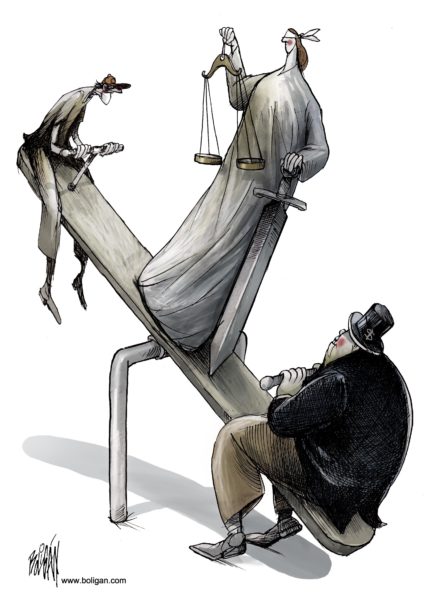
The Universal Declaration of Human Rights came as a necessity, after some peoples, countries, and groups had persisted in committing human rights violations. Those responsible for drafting this declaration relied on their awareness of the aforementioned necessity, as well as a comprehensive view of the global intellectual and cultural heritage—philosophy, science, culture, and even religions—to derive from all of the above what is worthy and capable of protecting human rights. Most of the religions we know are in agreement with the Universal Declaration of Human Rights, with the exception of the Muhammadan faith, which has disputed it, citing flimsy reasons: fanaticism, extremism, irrationalism, etc. We will attempt to demonstrate the illogicality and validity of this body’s objections! We do not intend here to engage in diplomatic quackery by claiming that the true religion is brimming with humane values, terminology, and moral rulings that respect human beings and their individual and collective rights. Then we marvel at the behavior of some Muhammadan clerics, which we assume contradicts the spirit of religion—that is, exonerating religion and criminalizing its adherents. We consider such behavior a disastrous slippery slope that leads to no positive outcome. The true religion is composed of principles and practice, and what can be practically understood from religion is its presentation and practice. Principles have no value in isolation from practice. It is useless to assume another religion ahead of, behind, or alongside the presentation and practical practice of religion by its adherents. They are the first and final standard, and through them we can understand religion. They are the most knowledgeable people about their religion. In other words, they are the religion. These people assume that the Universal Declaration of Human Rights will lead to the loss of the Muhammadan identity. This assumption is largely true, as the Universal Declaration of Human Rights contradicts that identity, which always seeks to possess a cultural specificity that possesses absolute truth. This identity, therefore, leads to isolation, seclusion, and absence from the arena of human interaction. The problem with the Universal Declaration of Human Rights for most, if not all, Muhammadan movements is a fundamental one. The true religion revolves around Sharia, while the Universal Declaration of Human Rights revolves around reason and evolution. The Muhammadan Declaration of Human Rights is the essence of Sharia, while the Universal Declaration of Human Rights is the essence of human rationality, composed of several components, including philosophy, history, science, religions, and more. Human rights in Muhammad are limited to practicing religious obligations and commitment, then worshipping and practicing servitude to God and His representatives on earth. The Universal Declaration of Human Rights, however, is based on a comprehensive view that recognizes complete equality between women and men, as opposed to a clear differential and disparity in favor of men in Muhammad. It relies on the legal capacity of a human being versus his legitimate capacity in the religious human rights system. The Universal Declaration relies on freedom of opinion and the development of the content of this opinion, as opposed to adherence to the rigid Sharia and laws in Muhammad. The Universal Declaration guarantees freedom of belief, which in Muhammad is limited and restricted to belief in the religion and the Seal of the Prophets, then rejecting other beliefs because they are beliefs of disbelief and misguidance. There is no freedom of belief in the true religion, because an apostate, for example, is given the opportunity to repent, and if he persists in his apostasy, he is killed. There is no such barbarism in the Universal Declaration of Human Rights. If we look at the global religious geography, we find that man in this world is not only Muhammadan, but he is more Buddhist than Muhammadan, and more Christian than Buddhist or Muhammadan. So what is the state of someone who wants to live with others, when he considers them all infidels, that is, he does not even acknowledge their existence in terms of belonging, conscience, mind, and thought. It is an annihilation of them..! Then this person wants to turn these people into believers, even by the sword, without thinking that other religions have their sanctity and honor. The punishment for apostasy from Muhammadanism is death, and the reward for apostasy from Christianity to Muhammad is heaven. Muhammadan movements are not capable of adhering to the concept of reciprocity, and do not think that other religions may not accept apostasy, but they do not deal with the apostate according to the Muhammadan way. They respect freedom of belief and freedom of religious choice. If the Muhammadan punishment for apostasy was applied practically, the world would turn into a lake of bloodMohammedan movements deny the most basic principles of individual rights in choosing their religious affiliation. Whoever is born a believer remains a believer, even if he later wants to become a Buddhist. If he becomes a Buddhist, his blood becomes shed. We understand religious freedom as freedom from religion as well, and not only in religion. The Universal Declaration of Human Rights emphasizes the existence of a secular philosophy. The secular is equal to the religious. If we ask the following question: Can the Universal Declaration of Human Rights be applied to every human being in this world?? The answer is yes, it is possible. The other question is: Can the Islamic Declaration of Human Rights be applied to every human being in this world? The answer is clear: it is not possible. Hence, it can be said that the Muhammadan Charter cannot be called a human rights charter. It is an Islamic charter for some Muslims only. As for the Universal Declaration of Human Rights, it is valid for this era and for all human beings, and due to its ability to develop, it becomes valid for all times and places. Article 2 of the Islamic Declaration of Human Rights states, “Man is born free and shall have no servitude to anyone but God.” This is a cognitive error, as he becomes free or a slave depending on his upbringing and education. The inevitability of his enslavement to God means his upbringing into a slave, as it is not right for a person to be free while being enslaved by another party, which is God. How can we know God’s wills and desires, when these wills and desires have been scattered among many religious movements and sects, of which the true religion knows hundreds. Then what is the state of someone who does not know God and does not acknowledge Him? The Muhammadans formally want to enslave God in His various and very contradictory forms and wills. In reality, they want to enslave humanity through their book, its commentators, and its jurists. This is tantamount to the enslavement of humanity by the jurists who practice contradictory fatwas and laws, which transform God, whom they say is One and Unique, into a group of contradictions and many gods, where each god considers the gods of the others to be infidels and heretics. Freedom of opinion, which is guaranteed by Article 5 of the Islamic Declaration of Human Rights, is only guaranteed outside of Sharia. There is no freedom to overturn Sharia, even though Sharia is the law that Muhammadans want to apply to people. How can a person be free if he is not able to criticize and develop the law that is applied to him? Then, regarding education, according to Article 3, which states that the goal of education is to strengthen faith, in other words, to abolish reason. What is the value of a creature who believes but thinks without reason? Strengthening faith means Muhammadan faith. Can following other religions be considered without education? The Muhammadan Declaration of Human Rights stresses at the end of its preamble that all the provisions of this declaration are bound by the provisions of Sharia and its objectives, justifying this by the fact that Sharia is the sole reference for interpreting and clarifying any article of the Muhammadan Declaration of Human Rights. The full text of the Islamic Declaration of Human Rights is published on the website syriano.net for those who want more information!