Between military service and conscientious objection
Mamdouh Bitar, Ruba Mansour:
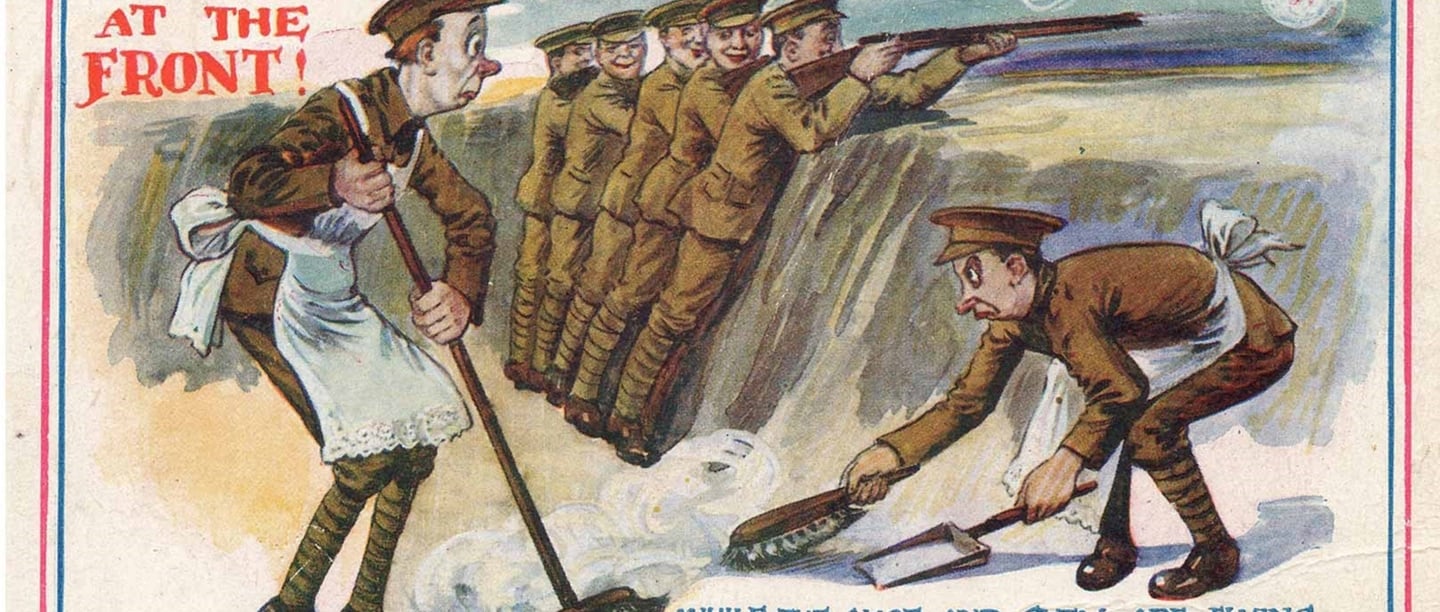 Conscientious objection is not a new phenomenon, Fear of conscientious objection has led some to refuse military service in societies that view such service as the ultimate honor and patriotism, The matter dates back to the middle of the nineteenth century, when a report issued by the New York City Council in 1841 described a group of young people who refused to serve in the army on conscientious grounds, Before that, in the third century AD, a Roman citizen refused to serve in the army on religious grounds, which led to his execution.
Those who refused to serve in the armies continued to refuse, and the number of those who refused to serve in the British army reached tens of thousands, and in America, some thousands. These people were imprisoned during the First World War, and they were released after the end of this war. After that, the reasons for refusing to serve began to be considered until most Western countries came to accept refusing to serve in the army and replace military service with civil service, such as working for several months in a nursing home or working in the field of environmental protection and other useful social activities.
The situation in Arab countries differs from that in most Western countries, as these countries do not recognize conscientious objection and apply compulsory military service. Those who do not comply with compulsory military service are punished with unprecedented severity. They may be summarily executed, or imprisoned for 15 years. Dismissal from employment was one of the mildest and most merciful punishments. In 2002, Arab countries, including Syria and Egypt, submitted a letter to the Human Rights Committee in which they affirmed their rejection of conscientious objection: “States do not recognize the applicability of the concept of conscientious objection to military service in all circumstances.”
The countries with the worst armies in the world, both morally and militarily, seek to corrupt the morals of their youth through a brutal upbringing that has no connection to patriotism, citizenship, or proper education, Service in Arab armies does not teach responsibility or independent thought; rather, it teaches the recruit how to give the officer his salary in exchange for a few days off, It teaches him contempt for the law and obedient service in the officers’ homes, It teaches him contempt for military ranks—how many lieutenants belonging to one sect command brigadiers from another? Military ranks have become sectarian ranks, Service teaches the soldier the arts of looting and extortion, and instills in him a sense of superiority over those he dislikes for their religious beliefs, The list of poor upbringing, bad conduct, and bad morals is very long, and pages could be written about the destruction of humanity within the military institution. Anyone familiar with the claims of these countries’ media would think that the military is a factory for producing pre-packaged men in the shape and measure of the ruler and for the ruler’s purposes, The armies of these countries are not schools for sound social or national education.
The question of compulsory military service has evolved into a question about the usefulness of armies in general, If usefulness is related to protecting the state and maintaining its security, then reality proves that the most secure countries are the 19 countries that do not have armies, The number of countries that do not require their citizens to serve in the army has reached 100 countries, and these countries are constantly increasing, and the Arab countries, as usual, are at the bottom.
Peace activists around the world have made May 15th a global day to support conscientious objection to military service and to abolish compulsory military service, because peace is a right for every human being, while war is an attack on every human being!
Views: 199