Historically, it can be said that the concept of nationalism is of European origin, This expression was born in the late eighteenth century as a synonym for the emergence of European nationalist thought, Therefore, nationalism and patriotism are sometimes mixed as if they were one value, Nationalism imposed itself in the Arab world in the last hundred years as a framework for the cohesion of the individual with a geographical, popular and social component called the homeland, that is, the emergence of what is called the nation-state or homeland, which nationalism maintains and protects.
Although the origin of the value of “nationalism” is not Arab, the verbal circulation of this value was and still is at its peak in this region. The matter is similar to democracy, which the Arabs excelled in talking about and its necessities. On the other hand, they excelled in avoiding its application and fighting it. In Europe, citizens rarely talk about patriotism or nationalism, and whoever talks about patriotism in the Arab style makes himself a laughingstock, because talking about the patriotism of someone is always linked to talking about the lack of patriotism of another. In Europe, there is no one who is unpatriotic or traitorous, even if he is opposed to the government’s projects and actions. The exaggeration in the use of the word “nationalism” is accompanied by the exaggeration in the use of the word “treason.” Other societies do not know such an extensive use of the concept of treason. However, in this region, this word is used hundreds of thousands of times a day. Whoever has a different opinion is a traitor, simply and automatically. In practice, the common meaning of this word has deviated from its true meaning, and in the context of the bankruptcy of values in general, it has become a single word. To praise, or more accurately, it has become a gateway through which another word, “betrayal,” enters, which has also gone bankrupt and is no longer used except for cursing, defamation, and slander.
The contents and standards of nationalism vary from one country to another, and within the same country from one group to another. At the level of individual and collective awareness, the meaning of this term also varies. The contrast or difference was most intense between democracies and dictatorships, and between sheikhdoms and republics. In sheikhdoms, for example, this expression is dwarfed to take a jurisprudential form in which the concept of nationalism is not rooted in its modern European form. The concept of the nation with a religious background dominates in this region, while the concept of the homeland is atrophied and dwarfed in reality, despite the fact that religious groups live in geographically and popularly defined homelands that are recognized as a state or homeland globally. These people feel they belong to a “nation” that transcends borders more than they belong to a “homeland” with borders, This is generally consistent with the jurisprudential view
In the democratic West, the concept of nationalism is primarily related to the issue of the land and what is on it, as the goal of national practice is the prosperity, flourishing and progress of society. However, in the personalized, dictatorial East, the concept of “nationalism” has been hybridized to be in harmony with the authoritarian “person” and his goals and whims, who has abolished the ownership of the land for those on it, and has become the owner of the land and what is on it. Every interest revolves around the person himself, his selves and his whims. Therefore, the value of nationalism had to be “disciplined and trained” for the new situation and be compatible with the person, i.e. the personification of the state.
Distortion and falsification are spreading epidemically in this region, and the most important distortion was the transformation of the effectiveness of the concept of nationalism in the active consciousness of the primitive people, to become an effective concept for national division and indirectly fatal to national unity, because the proliferation of the use of this term in defining the status of a citizen is linked to the proliferation of the use of the term “traitor” in defining the status of another citizen, and from here comes the “product” of national division from this use. Here lies the catastrophe that destroys trust between the classes of society, and also destroys equality and consecrates dictatorship, rather it is a necessity of dictatorship, which depends on exclusion, polarization and individualism. The dictatorship cannot justify its existence except by confirming the treason of one class and the citizenship of another class, and the “national” class that the dictator represents is the class that monopolizes power because it is national, while the other class is the class of treason, which the dictator bestows upon it, in the best of cases, lenient imprisonment and light torture, that is, he tries to discipline and train it so that it becomes “National” and join his flock!
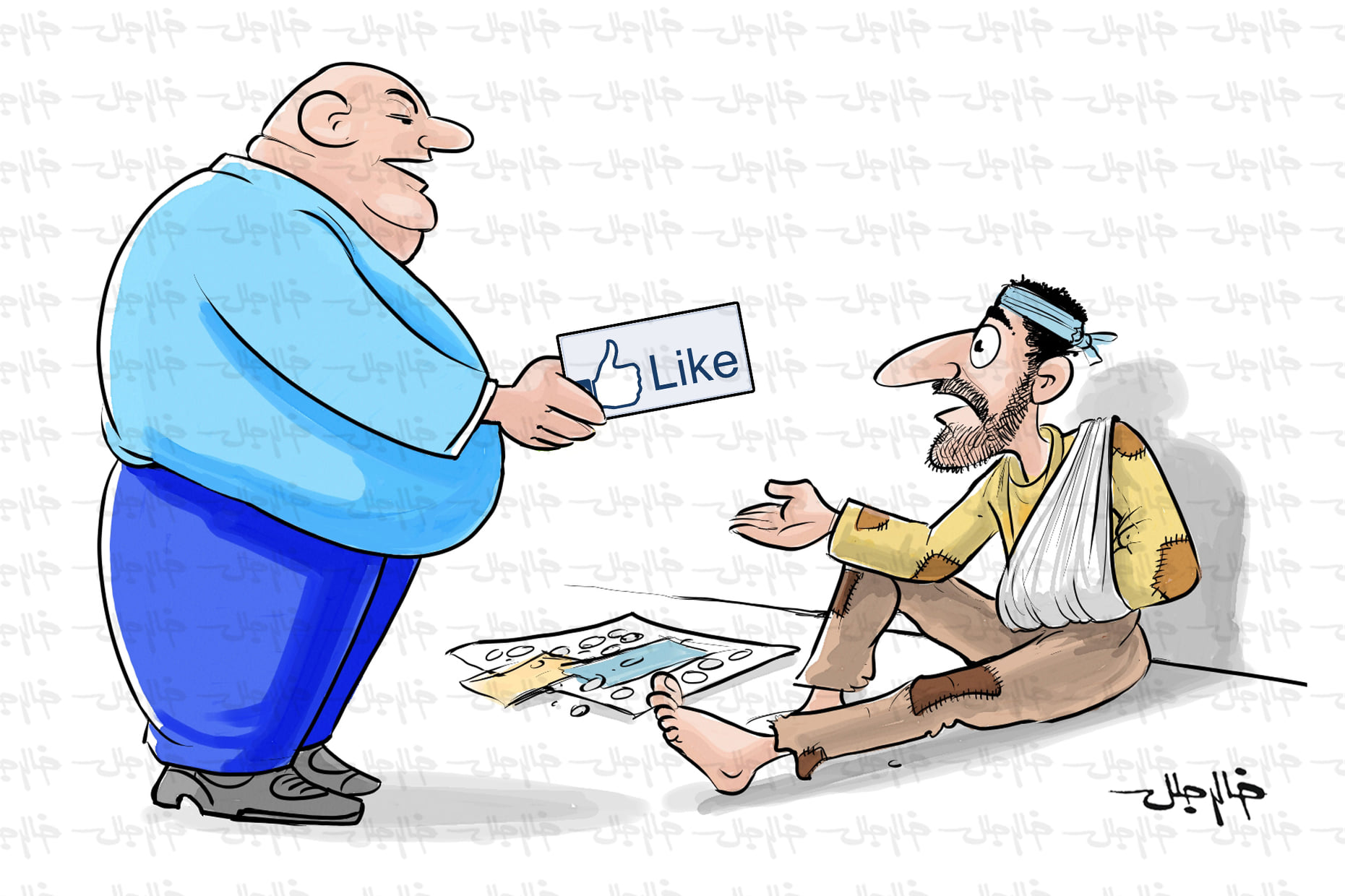
With every problem faced by the state and with every failure of the authority to manage the country’s affairs, talk of conspiracy is repeated, which classifies the people into two categories: the patriotic category and the traitorous, conspiring category. This classification eliminates the possibility of dialogue and the possibility of speech between these categories. This elimination is a basic goal of any dictatorial authority, as the dictatorial authority does not like speech and the exchange of ideas, because it has no thought! And what it has, it uses, such as prison and its accessories, such as the whip and the machete, which rains down on the necks of people to the tunes of chants and anthems, which glorify the leader and sing about the homeland. Then comes the role of the henchmen to distribute certificates of patriotism to people. Whoever is not patriotic according to the assessment of the henchmen ends up in arrest and torture, where after that the mediation machine and the payment of barrels turn to release the afflicted. All of that was in the name and in the name of patriotism and in the name and in the name of its counterpart, which is treason. All of that was in the interest of the dictatorship, which divides to conquer, divides on a sectarian basis. It divides people based on ethnicity and affiliation, and divides them into patriots and traitors.
The increased emphasis on “patriotism” is directly proportional to the increased need for deception, especially when problems arise that dictatorships are unable to solve. In the event of failure, the production of slogans reaches the highest level, and the implementation of these slogans reaches the lowest level. Theorists of nationalism multiply, as do their lessons and sermons regarding the necessity of patriotism and the necessity of loving one’s country. As for the necessity of the citizen loving his country and his concern for the citizen’s rights to freedom and equality, talk is silence. Why should a citizen love his country when he does not love this country!!!!