Mamdouh Bitar, Ruba Mansour:
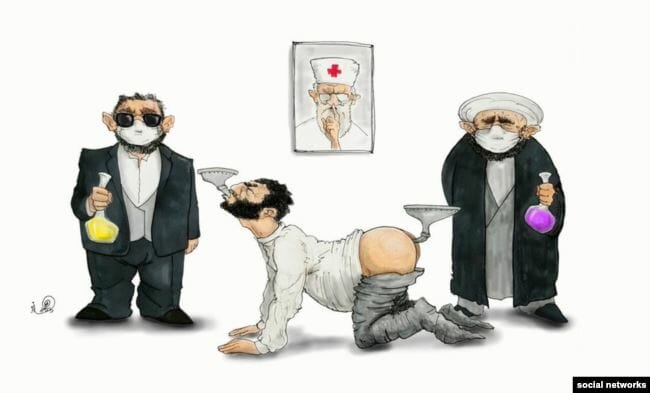 It is logical and scientific to link living conditions to psychological conditions, even if only partially, as well as to environmental, heritage, historical and religious conditions, especially among peoples whose lives are filled with religion and religiosity, It may be possible to identify the conditions of these peoples psychologically and consequently behaviorally by identifying the psychological and behavioral conditions of their rulers and leaders, Many psychological manifestations in the individual are intensified in his ruler or leader, The conditions of peoples are an image of the conditions of leaders, and the despicable patterns of instinctive behavior that distinguish leaders are perhaps endemic, in a mild form, to the being of most individuals of peoples, Leaders did not fall from the sky, nor did they study the arts of humiliation and exploitation at the Sorbonne or Oxford, Even their education, as far as we know, was in most cases local and very modest, and their social status was also popular.
The peoples of the world share many commonalities, some of which are locally concentrated, such as narcissism, the passion for enrichment, the ease with which corruption is practiced, and the tendency towards deification and the lack of a sense of equality with others because they belong to the best nation, This local concentration of some characteristics has reasons, including the state of the soul and sex and the relationship between them, Man in this region is sexually repressed on earth, and he thinks that he is completely unleashed in the heavenly gardens, meaning that he lives in a state of permanent contradiction and strict schizophrenia that leads to the cessation of emotional growth and the obstruction of humanization on earth due to the tyranny of deprivation on this earth, Obstruction of humanization means the growth of animalization, and also means the growth of asceticism in earthly life and working for an alternative life in heaven, Neglecting earthly life does not only mean disregard for one’s own life, but it means primarily disregard for the life of others, which inevitably leads to a decline in the quality of worldly life towards developing its cheapness or lack of respect for it, This means, as a result, indifference to it and a decrease or lack of concern for it, which means the intensification of the presence of culture Death, which requires venerating death or encouraging it by convincing some of the alternative eternal life, where there is no deprivation of anything, especially the forbidden things on earth.
Since the Creator is capable of everything, therefore the one who represents Him on earth must also be capable of everything, Here, the absolute will of the Creator is transferred to the absolute will of the person, What does the absolute will of the person mean?? It only means the absolute dictatorship of a person, and to justify that, the dictator must be great, at least in his own view and in the view of the henchmen surrounding him, This view leads to the dictator’s mind regressing to a form of megalomania, which affects the situation of the subjects either negatively or positively, and in the overwhelming majority of cases negatively and very significantly, This matter even confused the translator of Michael Hart’s book about the 100 most influential people in world history, as the translator did not understand the difference between a “great person” and a “great influence ,” Hitler’s influence was great, but Hitler was not a great personality,The same was the case with Omar Ibn Al-Khattab, Khalid Ibn Al-Walid, Genghis Khan, his grandson Timorlank, and others,The influence of these people was great in its negative form, but they were not great in the positive sense of the word.
Because the lives of believers were filled with religiosity and “formal” religion, plagued by the concept of suitability for all times and places, this caused the suitability for all times and places to be transferred from religion to the ruler, There was no Arab ruler who did not believe he was eternal, with the exception of General Suwar al-Dahab of Sudan, who carried out a successful coup, but after about a year, he voluntarily relinquished power to someone else, There was not a single Arab ruler who doubted himself and his suitability even after his death, Here, he wanted to practice rule from the grave , This condition represented the disease of the “newcomers to power” and was based on fatalism and schizophrenia, The disease did not only afflict the usually deified leader or the ruler like the caliphs, but it afflicted all the soldiers of the conquerors who lived off the proceeds of the conquests, i.e. the spoils of war., Whoever belongs to the best nation and asks, “Are the believer equal to the unbeliever?” behaves pathologically, as described in the previous lines!
Such a development requires popular, authoritarian, and highly concentrated personality traits, including an inflated ego, and consequently, an inflated narcissism,An inflated ego allows for the consecration of the concept of inequality and superiority for some, and also allows the individual to climb mountains of human debris, This only happens in the presence of cruelty and brutality, along with opportunism and flattery, Not all of these traits are monopolized by the authoritarian, but rather are widely spread among the popular circles, such that it can be said that peoples are like their rulers in terms of quality, Here, it must be acknowledged that there are some differences in terms of quantity, as is the case with gangs composed of almost similar elements, but they differ in terms of the amount of crime.
The psychology of the ruler and the ruled in this region can be expanded, for example, by analyzing the phenomenon of “suspicion,” i.e. the individual’s suspicion of his surroundings, The best example here is the concept of conspiracy, then the rejection of criticism by those afflicted with the sacred, which is considered by those afflicted with religion as “contempt for religion,” knowing that the content of the lives of those afflicted with religion does not exceed the limits of religiosity, and this life has no other content, They are poor because of religiosity, hungry because of religiosity, backward because of religion and religiosity, and criminals for the same reasons. The apostate is killed, the adulteress is stoned, and the one who abandons prayer is slaughtered. There is no need to enumerate all the other reasons for backwardness, barbarism, and ignorance related to dealing with women, with science, with the concept of state society, or the concept of homeland, etc. There is no problem that is not related to religion and religiosity, therefore there is no criticism that is not considered “contempt.” Despite that, we will continue with criticism whether it is considered contempt or not!!!
Views: 393