
Ruba Mansour, Mamdouh Bitar:
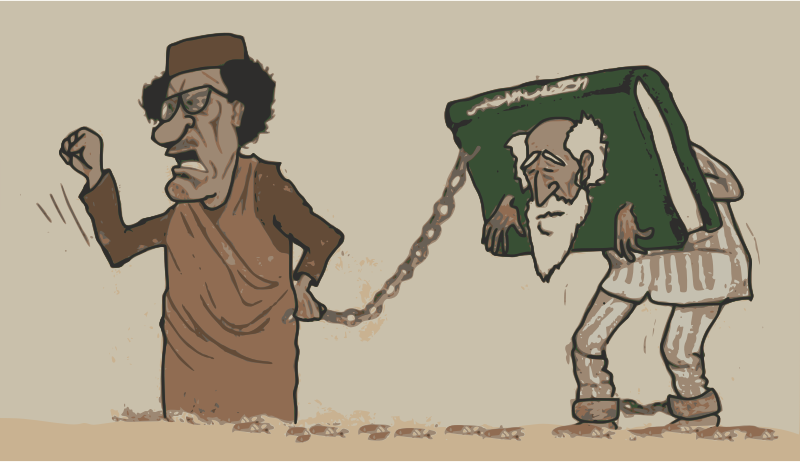
Does any sane person expect Arab democratic development to not falter? Is there any evidence to confirm even the modest minimum of its success? Have Arabs, in recent centuries, seriously pursued the democratic path? Who are those who are serious about democratic development? Is there an independent “popular” will? Are there even Arab “peoples” in the sense of “people and state”? Is democracy suitable for groups dominated by Bedouin, tribal, familial, and religious characteristics? There are hundreds of questions on this topic. Compared to other peoples, it can be said that Arabs are among the peoples in the world who talk the most about democracy, and among the peoples who practice it the least. Arabs are the ones who talk the most about democracy, and the least who practice it. Consequently, the Arab lives in a painful paradox. The Arab is a human being like any other who aspires for what is better. Therefore, he talks about what is better. Talking about what is better is not subject to objective constraints, while the life of democracy presupposes its existence and its realization. Realization is subject to objective factors that may be historical, economic, religious, external, internal, etc. How easy it is to talk and how difficult it is to achieve!! The entanglement of matters between the conflict and intersection of historical data, then the overlap and divergence of interests confirms a fact, namely that the “stumbling” in democratic development in this region was the only constant, which must be expected despite its rejection and lack of desire. However, it is also the element upon which dictatorships relied to justify their existence and the continuation of this existence. Dictatorships gave this element different names. Mubarak called it “chaos” and said, “Either me or chaos.” Bashar called it the end of Syria’s existence, division and fragmentation, then the end of resistance and the expansion of Israel from the Euphrates to the Nile, meaning final destruction. The difference between Mubarak’s and Assad’s estimates was the following: Mubarak warned of automatic consequences, while Assad spoke of automatic consequences in addition to the “punishment” that he would inflict on the Syrian beast if the beast dared to reject him and demand his departure or deportation. Therefore, the Syrian adventure for a better democratic life was very dangerous. In the event of failure, the Assad disease would remain present, and before success… In fulfilling the people’s demands, Assad will burn the country. Those who believe the content of this equation will not revolt and will prefer to remain a “liar” with Assad forever. As for the newcomers, their tongues are paralyzed regarding democracy, unable even to utter the word “democracy.” Is uttering the word that dangerous? And how can most of the world’s peoples live with democracy without risk? It can be said that modern and ancient Arab history does not know of any serious effort for democracy. If we limit our assessment of development to the period following Arab independence, we will clearly find that serious efforts were directed toward strengthening dictatorships, i.e., working to “prevent” democracy. Can democracy fall from Mars or arrive with revelation via the Angel Gabriel? People did not sow to reap, and to this day they do not sow, so they will only reap the opposite of democracy. And what is this opposite? The regimes in the countries of this region stand on opposite sides: the state follows the regimes, while the regime must follow the state and obey its orders. If democracy is lexically defined as the rule of the people, then legally it means the supremacy of the abstract state over any regime and any personal, familial, partisan, or sectarian authority. The supremacy of the regime over the state, that is, over the authority of the people, means logically and technically that the regime chooses the people, not the people choose the regime. In other words, the mechanism is reversed, and democracy is reversed. Within the framework of this inversion, the establishment of democracy in its Greek sense becomes impossible. The same applies to religion and its relationship with the state, and in a more disastrous manner. The source of authority in the state subordinate to the sect is God, as opposed to the military dictatorship, and the constitution is Sharia, as opposed to constitutions tailored to the dictator. As in dictatorships, God chooses his people, while the people have no choice but humiliation, degradation, poverty, and backwardness. The factors that hinder democracy in the countries of this region are twofold. On the one hand, there is religion, and on the other hand, there is military dictatorship. Then, on the third hand, there is the intersection of interests between the dictator of heaven and the dictator of earth. There is no conflict of interests except when one of the parties violates the process of intersection of interests. Then the disputes begin, which develop into nihilistic wars and destructive violence. How many Arab entities have suffered and are suffering from violence and internal wars?