The sect, in general, represents parasitic structure that has no rights over the individual or the state, The subject of mutual rights is limited to the individual and the state, and each has a right over the other, The sect is parasitic on the individual and the state, as it offers the individual nothing but the material of discord and hostility towards others, and offers the state nothing but the material of division from others, The sect, in its Eastern political form, is a state within a state, and thus represents a source of political and material strain on this state, as the costs of building thousands of places of worship, for example, are enough to build hundreds of universities, hospitals, and schools, The sect, which is by its nature sectarian, sells the individual a superior affiliation that leads to the destruction of national affiliation and leads to infighting between sects, which causes conflicts and wars that destroy the state and the peoples of those states! A state that can progress and offer something positive to humanity is a state made up of individuals united by political orientations that are subject to change and development. Political sectarian affiliation is an affiliation that is not suitable for easy change, A citizen’s affiliation to a sect is a superior affiliation that damages and destroys affiliation to the homeland, A citizen’s affiliation to a political party is a subordinate affiliation that forms the base upon which the homeland can be built, The superiority of sectarian affiliation is due to the sanctity that does not accept being placed under the national affiliation, which is not sacred and is subject to change and alteration, It is an affiliation that is not compulsory, unlike the forced, innate sectarian affiliation. The culture of freedom and choice is overthrown in societies of political sectarian affiliation immediately after birth, After birth, the direction and path that the individual must take are determined, This represents a kind of “birth-based” colonialism, which prevents the growth of independence and the maturation of the practice of freedom and responsibility, It encourages dependency and undermines rationality by eliminating the need for it, As long as religion exists and regulates life in this world and the hereafter, what need is there for reason?! The fate of man is written, a destiny, Alienation reaches the point of stripping man of responsibility for himself and his choices, Man is absolutely controlled! And can there be a colonialism more insidious than the colonialism of religions over man?
The political sect represents a continuous separation from the state society and a readiness to threaten a deeper separation when it does not achieve what it wants of hegemony, which is imposed by the sectarian situation characterized by the superiority of one sect over another, Therefore, the sectarian society is a tense, conflicting and constantly anxious society, a society that has lost the collective character and turned into groups that live alongside each other and not with each other, Here, religions provide man with therapeutic fabrications such as tolerance, love, coexistence, endurance and generosity, etc., in order to alleviate the sectarian disease that has afflicted society, There is no need for all the fabrications that were mentioned in the era of law and the social contract.
What has been mentioned in the preceding lines represents some of the problems of sectarianism and religious colonialism internally,Externally, there is religious colonialism comprised of endless cycles of colonialism, which may last for thousands of years, unlike non-religious, i.e., civil forms of colonialism that do not recognize such longevity, Generally, religious colonialism does not build; rather, it worships and prays, For 1440 years, religious colonialism has sat upon the necks of the peoples of this region, Anyone who takes a cursory glance at the achievements of this colonialism will see neither development nor construction, but rather will learn from history of a vast amount of destruction, wars, rivers of blood, and the ripe heads that were plucked, as Abu Yusuf al-Thaqafi described in his famous Kufa sermon, Al-Thaqafi was no different from other murderers of his time, nor was he different from contemporary jihadist criminals, On the contrary, we have seen the remains of the Greeks in Alexandria, the remains of the Romans in the Mediterranean basin, especially in Syria, and the remains of Hammurabi and the Pharaohs,Regarding the Pharaohs, it can be said that One of the goals of the Egyptian Brotherhood was to demolish what remained of the pyramids, after Saladin had demolished several of them.
Unlike religious colonialism, civil colonialism knew different types of partnership with the peoples of the colonies in governance, In Rome, there were several emperors from the colonies, while the Quraysh colonialism and then the Ottoman colonialism did not know any participation of the peoples of the colonies in governance, which was monopolized by the clergy in partnership with princes, sultans, and caliphs. Civil colonialism did not change the language and religion of the peoples of the colonies, while religious colonialism imposed its religion and language on the peoples of the colonies by the sword, either Islamization, or the jizya(tribute) or fighting! That is, the slaughter of the peoples of the colonies, as stated in the Pact of Umar There is no need to mention all the differences between religious colonialism and civil colonialism, as what has been mentioned very briefly is sufficient to give a sufficient impression of the subject!
What is the necessity of all this sectarian and religious oppression, both internally and externally? Instead of religion or sect representing the highest form of belonging, there is the nation, which modernly represents the highest form of belonging, There is no need for sectarianism in nations, nor for invading or colonizing the homelands of others, Cooperation between different nations is the foundation and origin of success and progress for everyone in all nations, What did the Bedouin gain from colonizing a quarter of the globe? And what did others gain from the colonialists? The colonial conquests destroyed the Bedouin culture of dual work and production, and thus, after the end of the era of conquests associated with plunder, pillage, and war spoils, the conquerors turned into beggars, mendicants, and criminals!

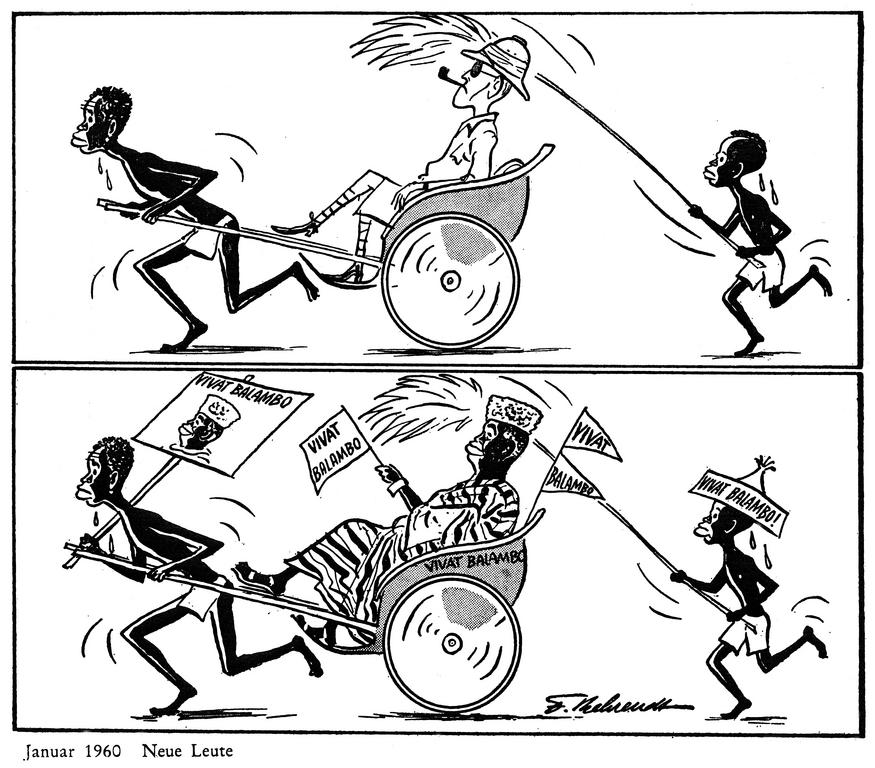 The sect, in general, represents parasitic structure that has no rights over the individual or the state, The subject of mutual rights is limited to the individual and the state, and each has a right over the other, The sect is parasitic on the individual and the state, as it offers the individual nothing but the material of discord and hostility towards others, and offers the state nothing but the material of division from others, The sect, in its Eastern political form, is a state within a state, and thus represents a source of political and material strain on this state, as the costs of building thousands of places of worship, for example, are enough to build hundreds of universities, hospitals, and schools, The sect, which is by its nature sectarian, sells the individual a superior affiliation that leads to the destruction of national affiliation and leads to infighting between sects, which causes conflicts and wars that destroy the state and the peoples of those states! A state that can progress and offer something positive to humanity is a state made up of individuals united by political orientations that are subject to change and development. Political sectarian affiliation is an affiliation that is not suitable for easy change, A citizen’s affiliation to a sect is a superior affiliation that damages and destroys affiliation to the homeland, A citizen’s affiliation to a political party is a subordinate affiliation that forms the base upon which the homeland can be built, The superiority of sectarian affiliation is due to the sanctity that does not accept being placed under the national affiliation, which is not sacred and is subject to change and alteration, It is an affiliation that is not compulsory, unlike the forced, innate sectarian affiliation. The culture of freedom and choice is overthrown in societies of political sectarian affiliation immediately after birth, After birth, the direction and path that the individual must take are determined, This represents a kind of “birth-based” colonialism, which prevents the growth of independence and the maturation of the practice of freedom and responsibility, It encourages dependency and undermines rationality by eliminating the need for it, As long as religion exists and regulates life in this world and the hereafter, what need is there for reason?! The fate of man is written, a destiny, Alienation reaches the point of stripping man of responsibility for himself and his choices, Man is absolutely controlled! And can there be a colonialism more insidious than the colonialism of religions over man?