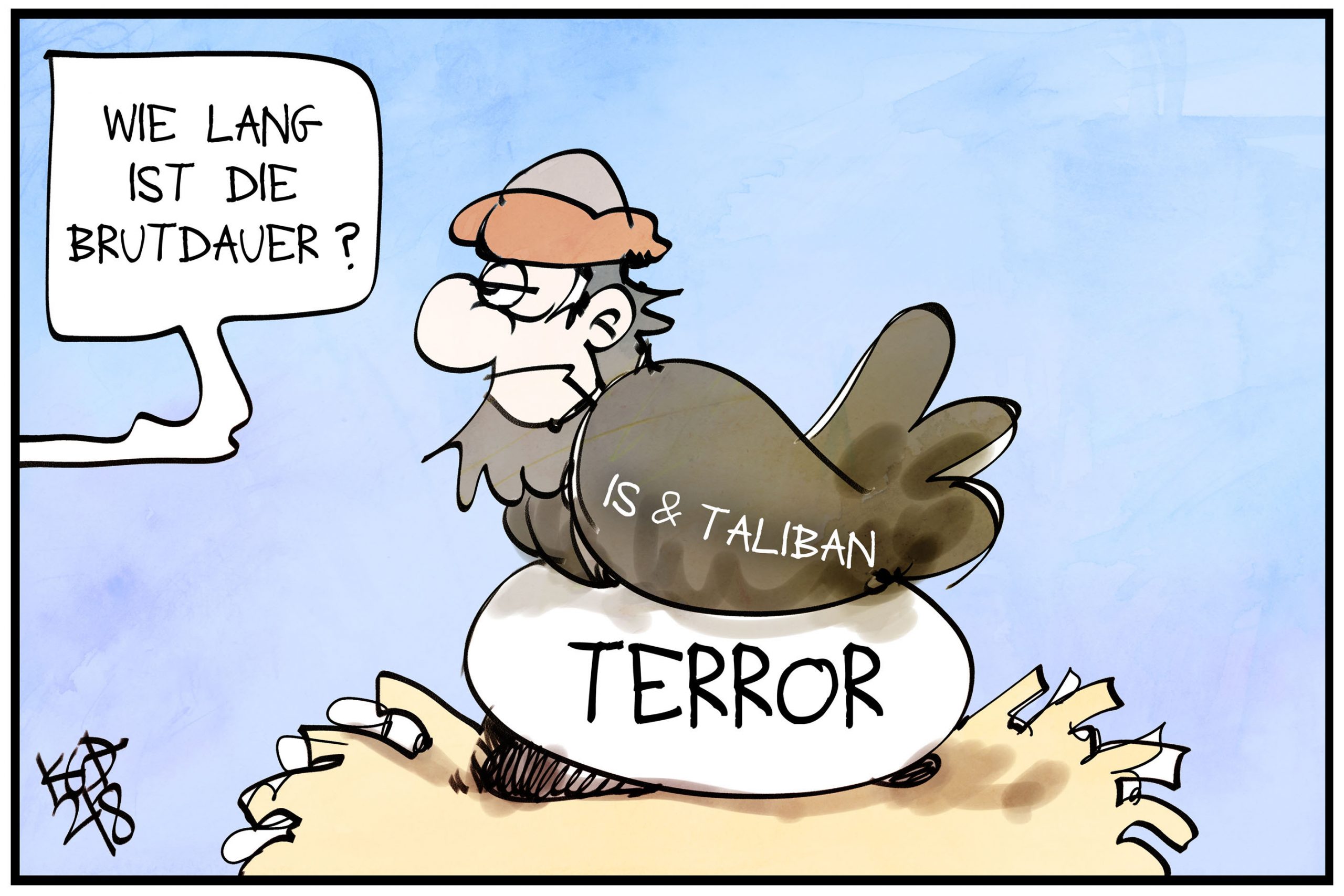
 The culture of violence, terrorism, and rejection of the other is based on many pillars,Violence, terrorism, and rejection of the other are born from the womb of totalitarianism and from the womb of the inability to deal creatively with pluralism, and then the neurotic tendency to impose homogeneity, All of this produced a culture of aggression, which has afflicted the peoples of this region, who are already predisposed to this disease, Most of the predisposition to aggression is due to the characteristics of pastoral Bedouinism, which are still socially dominant, characteristics such as revenge, retaliation, the inability to engage in dialogue and exchange ideas, the failure to acknowledge mistakes and the possession of absolute truth, violence, contempt for women, and other negative characteristics that distinguish Bedouinism from urban life.
Bedouin culture was transferred to the consciousness of these peoples through the gateway of conquests and the gateway of religion, which was also affected by it, and consequently became a practitioner and promoter of it, especially after the occupations and conquests. The influence of religion on Bedouinism fell in the Saqifa, for in the Saqifa the concept of “the nation” fell, which was supposed to be the alternative to the concept of the tribe or clan, The tribes and clans did not turn into something resembling a single nation except in one field or one branch, which is the field of war, captivity and plunder.
The Bedouin characteristics were not innate, but acquired through the influence of the harsh desert environment on the desert inhabitants, an environment that does not allow for the practice of the duality of production-subsistence, As an alternative, there was the birth and flourishing of the duality of plunder-subsistence, since there is no production in the barren desert, which could not be transformed into agricultural land, and thus enabling the Bedouin to remain in the place, a necessary stability in order to establish cities, i.e., urban life.
Due to the scarcity of the barren desert and the harshness of the environment, the Bedouin found in the new religion an organizer of the dilemma of obtaining the necessary sustenance to cover the costs of life. Instead of practicing raiding each on his own, that is, each tribe or clan on its own, they united under the umbrella of conquests, raiding, then stealing, looting and taking captives within the framework of the rule of one-fifth for the leadership, and four-fifths for the mujahideen, not for the sake of God, but for the sake of spoils.
The raids began before the religion actually spread, even among the raiders. The period between the birth of the call and the beginning of the raids was so short that it is possible to doubt that the fighting mujahideen were really followers of the religion with certainty, but rather followers of the looters of spoils, which the religion organized and encouraged, Their individual practices turned into collective practices, as the tribes practiced collectively what they had practiced individually.
The goal of the invasion was the fertile, rich regions such as Mesopotamia, then the Nile Valley and the Levant in general, They chose the fertile regions not to work in agriculture, for the invaders did not work at all! Rather, they encroached upon others and practiced fierce taxation, which impoverished the peoples of the conquered colonies, The culture of work and production was nonexistent among them. Unfortunately, they were only men of the sword.
They established a military regime in the colonies, which contributed to the Arabization of the peoples subjected to Bedouin control, The rule was Bedouin, and the ruler was an absolute, oppressive Qurayshi Bedouin, They exercised this through numerous means, including forcing people to change their religion, language, and values, They occupied minds as well as strongholds, They were avid prolific breeders, thus securing a sufficient number of fighters. Initially, they relied on others for administration, but they maintained control of the key positions in the power structure. The decision-making power was theirs alone. They did not integrate with the inhabitants of the colonies, and the colonists had no role other than providing services, paying tribute, and providing captives and slaves, They learned nothing of note from the inhabitants of the conquered territories, What could the conquered peoples learn from them other than violence, warfare, domination, the collection of tribute and taxes, and Bedouin customs and traditions, which were imposed alongside the new religion and language? The new one is by the sword’s edge.
Bedouin characteristics were imposed, and thus Bedouin culture prevailed, and the features of previous civilizations such as the Sumerian, Greek, Roman, Persian, Pharaonic, and others disappeared. The peoples who invented the alphabet and the plow stopped creating, as the atmosphere imposed by the invaders is not compatible with creativity, It is an atmosphere of obstacles, prohibitions, and restrictions, Thus, by looking at the region, one can confirm that the wheel of progress and development has stopped. The Levant has turned into a functional desert, and the inhabitants of the Levant have turned into Bedouins without a desert, That is, development forward has not only stopped, but there has been a regression backward, The society of agriculture, crafts, writing, construction, and Levantine arts has turned into a society of tribes and clans like the tribes and clans of the desert, No letters, no agriculture, no construction, but rather ruin, barrenness, stagnation, and petrification.
The Bedouin had a savage, steely grip, This is how they were able to eliminate almost all the scholars by barbaric means, Only a very few of them were spared from slaughter, burning, crucifixion, roasting, and starvation, and most of them were of Persian origin, Through barbarism in dealing with those who were intellectually different, the Bedouin were able to impose their culture on the peoples of the conquered countries, and they were able to obliterate the civil cultures of those peoples, the cultures of science, innovation, and thought, with which they enlightened the world, Imagine another path of history, a path without the Bedouin, Imagine if these peoples had been left free to work, free to think, and free to create, Is it not expected that these peoples would lead the world to a higher and more beautiful horizon, a horizon of progress, peace, and success, and not a horizon of military, sword, killing, and barbarism?
Just as they destroyed the lives of their own scholars, they destroyed the lives of other peoples, drowning them in seas of blood, pain, backwardness, and hatred for fourteen centuries, For centuries, these peoples have lived in increasing humiliation, increasing poverty, increasing moral decay, and increasing failure,And what is most bitter of all is the deep-rooted mentality of failure, inadequacy, hatred, and violence within them—a mentality difficult to eradicate in a reasonable timeframe. It must be eradicated if these peoples desire life, dignity, and freedom!
See less