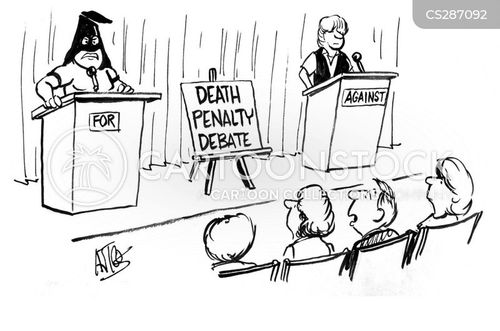
 After the death sentences were issued, great joy erupted in the hearts of some, We see the matter in a different way!
The Syrian world is about to paint itself surrealistically, in a way that ugliness has become a beauty that is repeated every day in this wretched Levant, Ugliness has become confused with meanness, and the intention here is to boast about the best nation, knowing that most of the countries of the peoples of the best nation are not free within themselves, but rather dictatorships, criminal in their nature, which took more than fourteen centuries to achieve, As a result, three of the countries of the best nation topped the lists of vice and crime, and it became clear that the people are equal in their savagery to their rulers,Rather, it can be said that the people are more criminal and savage than the criminal rulers.
Amnesty International reports confirm that Egypt occupies the third worst position in the world in terms of the number of executions, Saudi Arabia previously occupied the first position without dispute, and Iran occupied the second position without dispute, Thus, the Arab-Iranian East leads the world in practicing the crime of execution, which Saudi Arabia crowned years ago by executing 81 people at once, In Egypt, at approximately the same time, 57 people were executed, including an 82-year-old man, As for Iran, words fail to describe it, as the Khomeini Republic and the Kingdom of the Custodian of the Two Holy Mosques alternate in the first position in practicing the crime of execution, In 2021, the number of executions in the Islamic Republic officially reached 254, The number of executions published by Amnesty International does not represent the true figures, as the real number is much higher than the officially announced number.
Do not kill! This was said thousands of years ago. Do not kill means do not kill absolutely. Do not mean do not kill so-and-so and kill so-and-so, Do not kill means that killing is not permissible in any way or for any reason. This applies to individuals and groups.
The situation has changed and evolved in this region from “do not kill” to “kill,” as the Association of Muslim Scholars in the Levant recently stated, The Sheikh of Al-Azhar also advised in this vein, not based on his own interpretation, but rather in adherence to the punishment for “hirabah” (armed rebellion), which states: “The punishment of those who wage war against God and His Messenger and spread corruption on earth is that they be killed or crucified, or have their hands and feet cut off on opposite sides, or be banished from the land, That is their disgrace in this world, and in the Hereafter they will have a great punishment ” Hirabah is nothing more than rebellion against the community, as Saudi Arabia justified the execution of 81 people at once, The justification included, alongside the charge of terrorism, the “deviant ideas” embraced by those sentenced to death. What are these deviant ideas?
The hadd punishment for banditry raises issues related to relativity and the concept of the state and the law, For Abu Bakr al-Baghdadi, like the Jordanian pilot, he was a highway robber who fought against Muslims and thus committed banditry, and therefore the hadd punishment for banditry was applied to him. This hadd punishment did not explicitly stipulate the death penalty by burning, but rather stipulated the application of punishments, or rather crimes, no less heinous than the most horrific types of crimes, And is there a crime more horrific than the crime of dismemberment, which was precisely defined as… the right hand and the left leg?!
We do not wish to compare the Grand Imam of Al-Azhar, Ahmed al-Tayeb, to Abu Bakr al-Baghdadi, The Grand Imam condemned all of ISIS’s crimes, but he advised the killing, crucifixion, and amputation of the hands and feet of ISIS members and other highway robbers, In this, he theoretically aligned with Abu Bakr al-Baghdadi but differed in practice. We excuse him for the discrepancy between his views and actions, There is a difference between al-Baghdadi, the self-proclaimed Caliph, and the Grand Imam regarding the definition of a “terrorist highway robber.” For al-Baghdadi, a terrorist is a “fighter” according to his definition of struggle, while the Grand Imam holds the opposite view, However, they agree on the type of punishment according to the hadd punishment for “hirabah” (armed robbery), Thus, in any dispute between two parties, one party is deemed guilty of hirabah and therefore punished accordingly, Whoever takes the claims of both al-Baghdadi and al-Tayeb seriously and believes in the hadd punishment for hirabah must apply this punishment to all parties, because each party, in the eyes of the other, deserves the hadd punishment for hirabah, Reflect, may God protect you, on this flawed premise, and answer the question. , To where ???
Where will these societies end up by resorting to crime as punishment—execution by hanging or beheading for deviant ideas, ideas that differ from those of Mohammed bin Salman? Where will these societies end up by deceiving themselves by claiming that this has no connection to religious teachings? If it truly has no connection to religious teachings, then delete it, don’t cite it, break free from this cycle of killing and vilification, and reject its legitimacy!
We imagine the plight of these wretched peoples, caught between an open killer and a hidden killer, In practice, these peoples exist among “killers,” meaning they are in a predicament, and there is no way out of this predicament except by declaring that killing, regardless of its source or who commits it, is a reprehensible crime under any circumstances, Killing is not a punishment; it is in itself an absolute crime that cannot and should not be subjected to the scales of relativity, Killing is absolute evil, therefore the death penalty or crime must be removed from penal codes, It is not permissible for an individual to kill, nor is it permissible for a state to kill, A state that kills legitimizes killing and thus legitimizes crime, From this perspective, the laws and constitutions of most countries in the world have distanced themselves from the death penalty.
Sharia law has always remained a source of legislation, such as the punishments for banditry, apostasy, fighting polytheists, the shedding of the blood of unveiled women by beheading, and the concept of jihad in the path of God, etc. Reliance on secular civil law will remain crippled, incomplete, and stunted, The only way to escape this legal decline is to abandon Sharia altogether by completely separating religion and state, whose features have, in many cases, regressed to the form and level of ISIS. The death penalty should be imposed.