We say to every Syrian who is proud of his nationality and loves his country: Have you heard of this first legal legislator who is from your homeland? We continue by quoting many who have written about him:
“If fate were to lead you to the Palace of Justice in Rome one day and you came across a towering statue, and upon gazing at it, you would undoubtedly feel a special kind of awe, that is only natural because, quite simply, he is Syrian, just like you… And if you were to visit the US House of Representatives and see a mural bearing the name Papinian, inscribed with the words ‘Author of more than fifty-six works on law that formed the basis of international legal legislation,’ you might even faint, especially if you were learning for the first time that this giant was Syrian, from your beloved Syria… He is the first Syrian jurist… Papinian gave the world the legal codes that are still in use today,’Author of more than fifty-six works on law that formed the basis of international legal legislation.’”
The influence of Syrian civilization on Roman life
It was said that Hauran was the granary of Rome, and that the olives and oil of Idlib were for lighting its lamps.
The ruins of the forgotten Syrian cities in the governorates of Hama, Idlib, and Aleppo today are the source of many similar examples throughout the empire…
We also say that the first and most important forms of churches adopted in the Roman and Byzantine states after it are based on models from Syrian churches, including, but not limited to, the Cathedral of Bosra in Hauran, whose roof collapsed, and similar examples such as the Cathedral of Hagia Sophia in Constantinople, as well as the Church of St. George in Azra…and the Cathedral of St. Sergius Paul in Resafa, Raqqa…
The influence of Syrian civilization on all aspects of Roman life led the Roman poet and writer Juvenal to acknowledge in the second century AD, saying:
“For a long time, the Syrian Orontes River has been flowing into the Tiber River, bringing with it its language, customs, lutes, and lyre with its slanted strings…”
Perhaps one of the most important influences of Syrian civilization on the world during the Roman era was its achievements in legislation and rights…
Beirut Law School
At the beginning of the third century AD, Beirut became the center of the famous Roman School of Law, which remained until the middle of the sixth century AD the most famous school of the states of Rome and its successor Constantinople. Researchers indicate that the founder of this school was Emperor Septimius Severus or Septimius Severus 193-211 AD, and then it was taken care of by his Syrian successors after him. As a result of the pioneering role of this Eastern school, Emperor Justinian called Beirut the mother of laws and their nurse.
Of course, we are not dealing here with a civilizational achievement of a specific time and era… We must look holistically within the realm of rights, as our region witnessed the birth of the first laws and codes… from Lipit-Ishtar to Ur-Nammu to Hammurabi to the Assyrian laws, culminating in the Beirut School of Law, which was the nucleus of global legal thought…
Paul Collinette says
In Beirut, the new Roman law was being drafted…and it is to a group of Syrian Phoenicians, the family of Septimius Severus and his advisors, that the new Roman law owes its zenith. During the reign of this Syrian dynasty over the Roman throne (193–235 CE), it appears that Roman law was developed and advanced from its rudimentary stage through the writings of five Syrian jurists, some of whom served as advisors to Emperor Septimius Severus, such as Papinian and Albian. In addition to these two jurists, there were Gaius, Paulus, and Modestus. It is noteworthy that they wrote their legal works in Latin, which led some historians to refer to them as Roman jurists, and this designation was subsequently applied to the legislation they produced, which came to be known as Roman law.
Biography: He is Emilios Papanian, the Syrian jurist and martyr of the justice whose laws he established.
Aemilius Papinus (Papinian), born in 142 AD in “Homs al-Adiya Umm al-Hajarah al-Sud” (Homs the Ancient, Mother of Black Stones), studied law at the Roman Law School in Beirut, which was then considered the “nursing mother of law,” and remained until the middle of the sixth century one of the most famous law schools in the Roman Empire…
He became a professor of law there, and his fame reached Rome, earning him the title “Prince of Jurists.” He served as an advisor to Emperor Septimius Severus. When Italian judges encountered a case not covered by their existing legal code, they consulted Papinian’s 1800-year-old writings as a legal reference. He held several important positions during the reign of Emperor Septimius Severus, the husband of Julia Domna, the Syrian woman who later ruled Rome.
He was close to this emperor, whose son would, by fate, kill him and end his life…!
The significance of the legislation written by Papinian and his four Syrian colleagues lies in its transformation of the prevailing legal system in Rome at the time, shifting it from a rigid, primitive legal framework to a more humane one. This humane approach to the laws stemmed from the Stoic school of Zeno, which was founded on ethics and wisdom, not on the principle of revenge. This marked a turning point in human history: the resolution of crimes was no longer driven by vengeance but by justice and reform. It was from this foundation that the roles of prosecutor, lawyer, and public prosecutor emerged. But before death claimed this exceptional jurist, the first to present the world with legislation that later shaped their laws, he was among the “Five Syrian Jurists” whose legislation formed 80% of Emperor Justinian’s Roman legal codes, which consist of fifty books and 2462 legal articles. These codes are considered the primary source from which modern European countries derived their laws, and they are the source of French law (and from it, Egyptian, Lebanese, and Syrian law…) and the laws of Spain, Germany, and Italy. These laws, formulated by Syrian jurists, including Papinian, contributed to freeing Roman legislation from its harshness and severity, after they imbued it with their Eastern spirit in all that they legislated.
It is worth mentioning that Papinian and other Syrian legislators of that time formulated their laws and legal writings in Latin, which made them historically classified under the name: “Roman jurists.” The name also applied to the laws they formulated, so the name “Roman legislation” was given to the set of laws in whose content Syrians contributed significantly. But history preserved the good for those Syrians, as historians said in that regard: “In the third century AD, Syria was reflecting to the world its legal traditions, which are considered the source of rights.”
Papinian taught his book “Questions and Answers” in Roman law schools, the first of which was the Model Law School in Beirut.
Among the events that confirm the humanity of our scholar Papinian, his reconciliation with himself, and his authenticity, is that after Geta was killed by his brother Caracalla, public opinion and the Senate were angry at Caracalla, who had killed for the sake of the throne. So the murderous emperor, Caracalla, asked Papinian the jurist to find a way out for him and acquit him of his act of killing his brother. However, Papinian refused and told Caracalla: “Committing murder is easier than acquitting the criminal of it, and accusing the innocent victim after his murder is another murder and a second crime…”
This stance led to Papinian paying with his life, on the orders of Caracalla. It’s worth noting that Caracalla had been Papinian’s student in his youth!
It is worth mentioning in this context that Emperor Alexander Severus, the last emperor of the Syrian dynasty in Rome (222-235 AD), surrounded himself with Syrian scholars Albian, Modestinus, and Paul. During his reign, the first church was built, and he returned the sacred Black Stone, which was meant to be the Kaaba of Homs, to Homs, which was later destroyed, unfortunately. In its place, he erected three busts of Zoroaster, Abraham, and Christ.
To illustrate the importance of what Syrian jurists contributed to Roman legislation, it should be noted that Emperor Theodore II issued a decree in 426 AD, known as the Code of Civil Procedure, in which he classified jurists into two categories and prohibited judges from relying on others in all the judgments they issue.
The first category includes the five Syrian jurists
The second category includes the jurists who were adopted by the five Syrian jurists.
The imperial decree stated that “if the judges disagree on an opinion and do not agree on it, the judge must take the opinion of the majority, and if the opinions are equal, he must take the opinion of the side in which there are two fathers.”
The so-called Justinian Codes of Law derived their material mainly from the material of the five Syrian jurists and the Beirut School of Law, which constitutes eighty percent of it.
Research shows that the contributions of these Syrian jurists to Roman law exceeded 80% of it, leading some researchers to say: In the third century AD, Syria was reflecting to the world its legal traditions, which are considered the source and origin of Roman law.
The works of these jurists
The jurist Gaius (130-180 CE) was considered a binding legal authority for judges due to Emperor Valentinus’s positive stance towards his works, which granted them official status. Roman historians regarded his legal writings as a primary source for Emperor Justinian’s codifications. Gaius’s works comprise four parts, addressing legal principles, forms, family rights, inheritance, and property. It is worth noting that these codifications, due to their importance, were adopted as training material in European institutes and universities.
It is worth mentioning in this context that Emperor Alexander Severus, the last emperor of the Syrian dynasty in Rome (222-235 AD), surrounded himself with Syrian scholars Albian, Modestinus, and Paul. During his reign, the first church was built, and he returned the sacred black stone to Homs, and in its place he erected three busts of Zoroaster, Abraham, and Christ.
To illustrate the importance of what Syrian jurists contributed to Roman legislation, it should be noted that Emperor Theodore II issued a decree in 426 AD, known as the Code of Civil Procedure, in which he classified jurists into two categories and prohibited judges from relying on others in all the judgments they issue.
The five jurists are believed to have been Stoics, followers of the Stoic school of philosophy adopted by Greek civilization. Stoicism is one of the third schools of ancient philosophy (322-100 BC), after Aristotle. It is a doctrine started by Zeno the Phoenician and followed by other philosophers in three stages, some of whom were Syrians, the last of whom was Emperor Marcus Aurelius. The doctrine has views on speech and metaphysics, but its ultimate goal is ethics, and other subjects have no value except insofar as they relate to ethics.
This leads to the belief that their Eastern Stoic spirit contributed to freeing Roman legislation from cruelty and harshness.
Babnian, the first martyr for justice
His murder was carried out treacherously on the orders of Caracalla, who had been a disciple of Papinian since his youth.
His tragic end was… the double crime of Caracalla, which began with the murder of his brother and was followed by the murder of Papinian…
This ending is the result of the conflict between Caracalla and Geta, sons of Emperor Septimius and Julia Domna, which ended with Geta’s murder at the hands of his brother Caracalla. Papinian refused Caracalla’s request, despite perhaps knowing of Caracalla’s hatred towards him, yet because he was a symbol of justice, at peace with himself, and unafraid to speak the truth.
In the story of the murder, Caracalla came to the legislator “Papinian” asking him to draft a letter in which he would seek excuses for what he had done and find a way out of what he had done before the Senate, which “Papinian” refused in those times, so the man of justice stood up refusing the request of Emperor Caracalla, saying his famous phrase that still echoes in the corridors of the courts to this day:
“Committing murder is less serious than justifying this murder.”
The emperor had no choice but to order his execution, so that his life would end in defense of justice, for which he not only enacted the necessary laws, but also believed in it and acted according to its requirements until the last days of his life, and offered his life as the price for defending it and his principles.
The historian Gibbon says in his account of the killing of Papinian:
“The execution of Papinian was a sad event as a public disaster.”
In conclusion
Because the spotlight has been deliberately and timidly shrouded in the history of Syria, particularly before the arrival of Islam, as if Syrian history began only with the conquest of Damascus in 633 AD, ignorance prevails regarding figures like Papinian, Apollodorus, Philip the Arab, and their predecessors who enriched Syrian civilization and whose brilliance illuminated the world.
And I ask, as a lawyer: “Did Syrian law students learn that Papinian of Homs was the source of the Roman law we studied in our history of law, which is itself a source of Syrian law through French law? This was only mentioned incidentally, and merely to fulfill a formality, in our study of Roman law and, before that, Hammurabi’s Code… and briefly in the Beirut School of Law. I don’t know the reason for this neglect of our country’s distinguished sons.”
Why are we neglecting these geniuses, unlike Italy and even America, in highlighting them by erecting statues in their honor and naming university halls after them according to their specializations?
The whole world is proud of them and their Syrian origin, and we prefer them in terms of names to many of those whom we consider to be giants of our history, who in reality are murderers, and who made people taste the bitterness of blood, violated honor, and caused destruction, and who are basically from the desert nomads who offered nothing but blood and destruction to the world… while these figures, such as Babanian and Apollodorus, lit up the world with the torch of Syrian civilization.
Therefore, very few Syrians know that Papinian was the Syrian jurist who introduced a qualitative leap in law and legislation to the world. His books and writings are considered the foundation of legal rights in the Middle Ages and modern times, at a time when the West boasts of what Syria has contributed to humanity. Our Syrian legal system is based on Roman law, and its offspring, French law, and its offspring, Lebanese, Egyptian, and Syrian law…
Of course, we are not here, as I mentioned elsewhere, but rather we are dealing with a civilizational achievement of a specific time and era…
It is necessary here to look comprehensively at this Syrian legislator and the circle of rights, since Syria, Mesopotamia, the schools of Antioch and Beirut… witnessed the first laws and legislation.

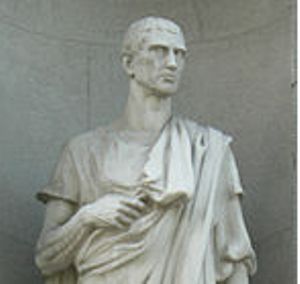 He is the world’s foremost legal scholar