Mira Al-Bitar Syriano
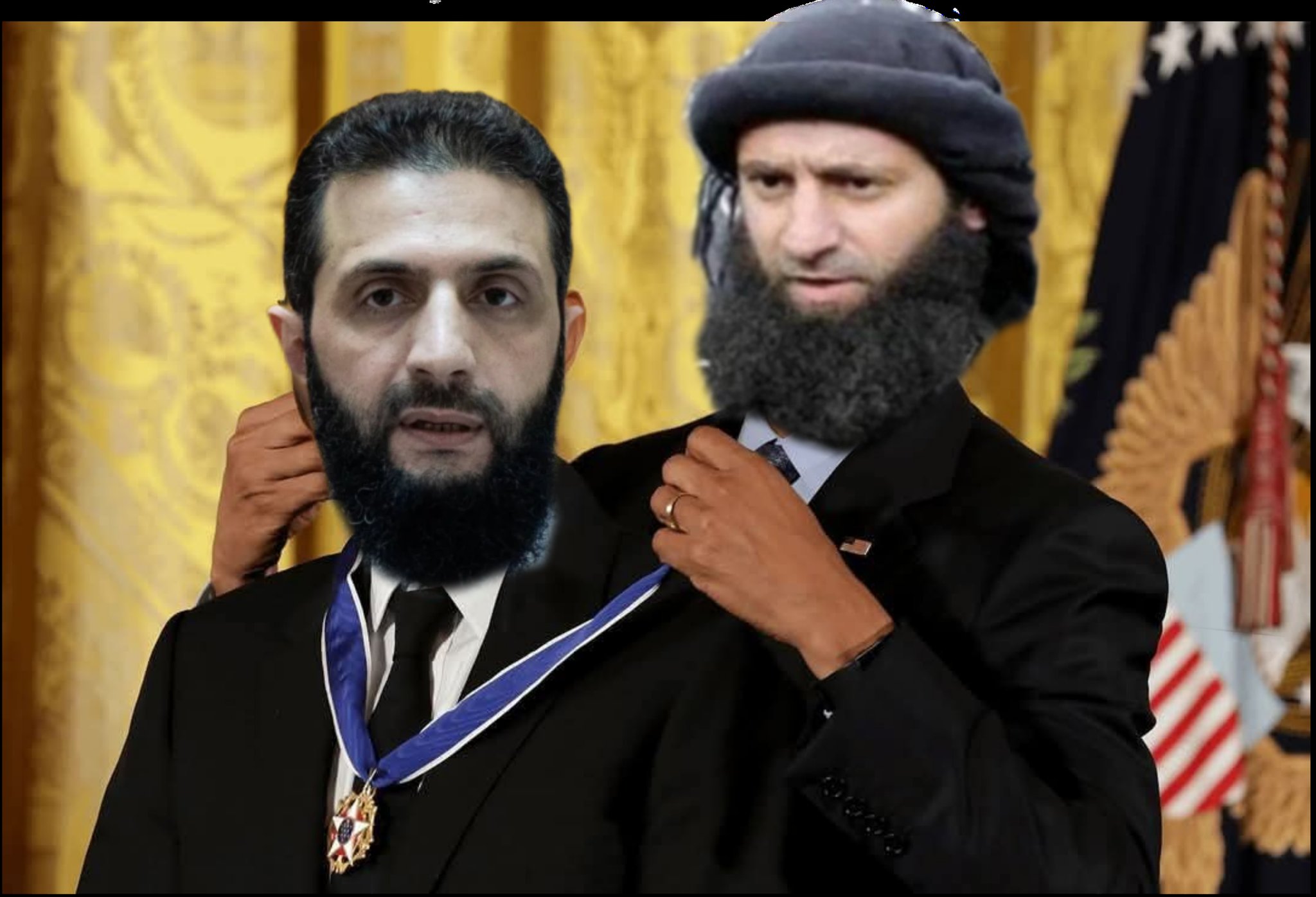
 The Arab-Muhammadan mentality is implicated to an absurd degree in the strangeness of everything that happens at the hands of some Muslims in the country and abroad,We are now once again confronted with the spectacle of execution by throwing a person from a height, as depicted in the attached image, Thus, it can be said that these people are practicing a tragic insistence on remaining in bestiality and criminality, and on the extinction of the ability to learn, progress, become civilized, and become human,. The problem is not limited to one terrorist who slaughtered another person in Paris for whatever reason, Before the slaughter of the history teacher, hundreds of thousands of people were slaughtered at the hands of religious criminals, whether it was Ibn al-Walid, Uqba ibn Nafi, al-Qa’qa’, Saladin, Zenki, and hundreds of others, The slaughter continues! The slaughtered one is slaughtered and shouts God is great, and the slaughtered one begs and asks the slaughtered one to tell her children that I love them, If the one thrown from the upper floors in Sheikh Maqsoud could say anything, she would have repeated what the French woman said when she was slaughtered, Even 2000 years ago, the crucified one said, “I love you,” and asked his Lord to forgive them! So there was humanity among some human beings, and humanity was not always animalistic.
The significance of killing by throwing people from the tops of buildings, as was practiced 20 years ago in Gaza by Hamas against Fatah followers, does not lie in the fact that slaughter and killing by throwing people from heights has a tradition called “dismemberment” in Islamic history, Harun al-Rashid, on his deathbed, ordered his opponent to be dismembered and cut into fourteen pieces, When he entered Baghdad, he proudly placed his opponent’s head on his spear, All the peoples of the world have committed massacres at some point in their history, but most of these peoples were deterred and distanced themselves from barbarity, which the mujahideen are still keen to preserve and practice, Here is Erdogan, the self-proclaimed guardian of religion, wanting to revive the practices of slaughter with his nominal and formal Syrian partners, How can Erdogan act contrary to his role models like Selim I and Muhammad al-Fatih, whom he venerates and glorifies, and hopes to be a ravenous beast like them?! How can someone who has practiced killing, bombing, booby-trapping, and slaughter through his work with Al-Qaeda, then Al-Zawahiri, then ISIS, and recently Al-Nusra, then Hayat Tahrir al-Sham, become humane?! It is impossible for Al-Julani to turn into Ahmed Al-Sharaa.
The problem is a normative value system, as slaughter is still present as a practice in the dictionaries and laws of the Muhammadans, The evidence for this is not only their slaughter of others, but they also slaughter each other, Some of them have not practiced slaughter due to the lack of an occasion, but they justify, praise, promote, and understand slaughter. They are theoretically slaughtered, and they can at any moment turn into perpetrators of slaughter and killing by any means.
They justify and condone the slaughter and killing by throwing people from the tops of buildings, because they are addicted to it, The material for practicing killing in all its forms is present in their customs, laws, and practices. The continuation of this in the twenty-first century provokes thought and an attempt to answer old-new questions again, Will what we see of terrorist regimes fight terrorism? Which is not limited to the bladed weapon of the Paris massacre or the Sheikh Maqsoud massacre or Hamas, but includes the heads and what they contain of intellectual backgrounds, morals, standards, values, and practices.
The question is whether the actions of some of the militants in Ashrafieh or Sheikh Maqsoud were individual or collective acts, and what is the connection between their ideology and these actions? Is what they did simply a common crime? How should the international community deal with these predators? These predators are fundamentally different from humans, and this difference is collective, not individual, Can one deal legally with those who do not recognize the law? Or patriotically with those who do not recognize the nation? Or humanely with those who have abandoned humanity and joined the ranks of predators? Who has perpetuated the barbarity of these beasts? Have these beasts learned from being treated as human beings? Are they truly fighting for freedom? Or are they addicted to slavery, obligated and committed to obedience and submission to the executioner who came from al-Qaeda in Afghanistan and from the dens of al-Zawahiri, then ISIS, until he reached Idlib and from there to Damascus? Many questions would have been better answered before the swarms of Bedouin locusts reached the seat of power in Syria, and before Europe opened its doors to millions of them, The greatest illusion was believing that a hardened criminal like al-Julani could transform into a human being, and what applies to al-Julani applies to his flock, The matter is not an individual mistake, but a collective sin that began to be practiced 1440 years ago and is still killing people by throwing them from the top floors of buildings!