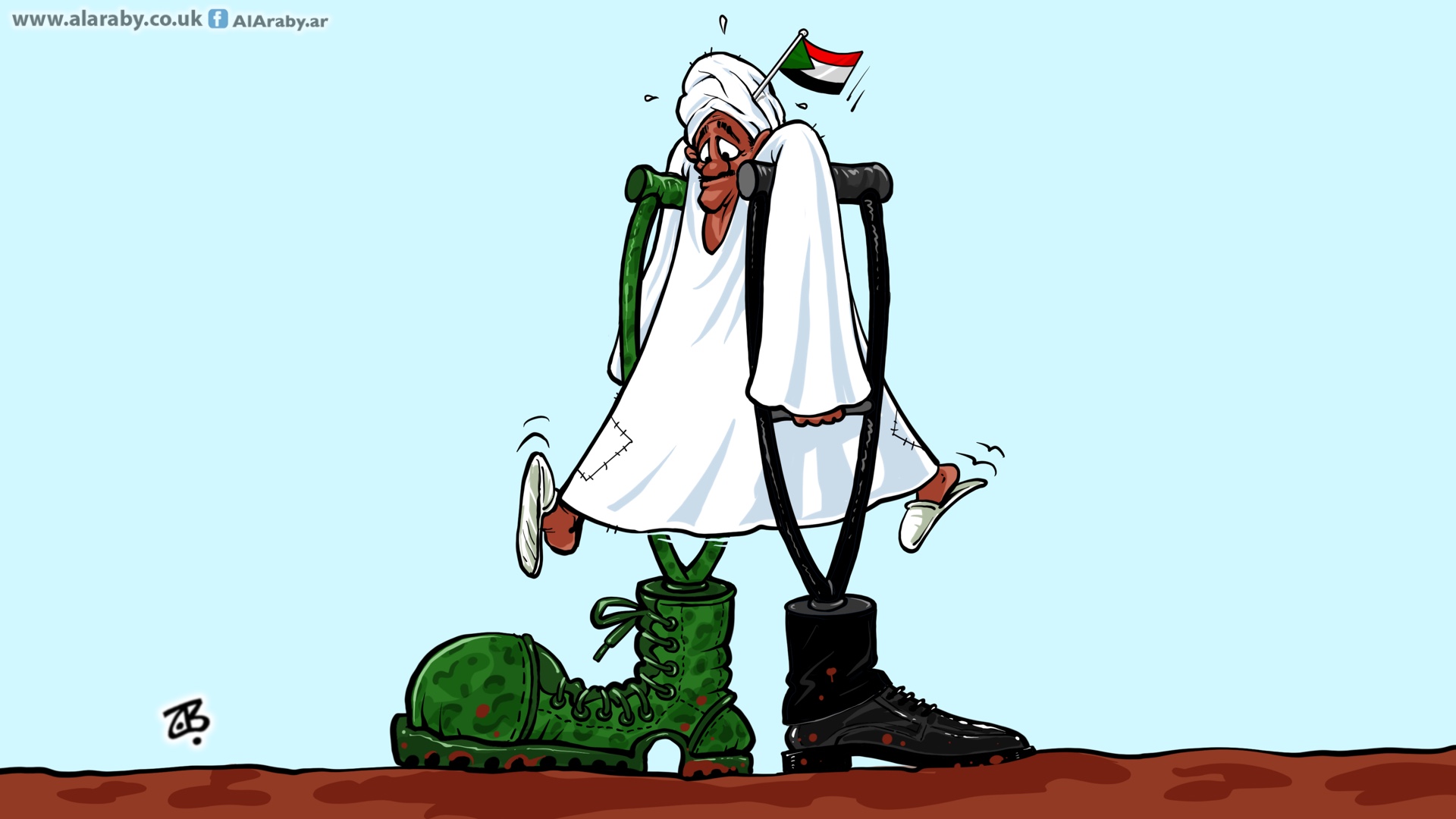
The Syrian landscape today presents a complex picture where contradictory phenomena intersect. On the one hand, there is a clear rise in ideological mobilization within state institutions, particularly the army, security services, and administrative bodies. On the other hand, limited spaces for freedom are emerging within society and in official media, making the Syrian transitional phase turbulent and uncertain. This disparity does not reflect a simple contradiction between openness and isolation, but rather a profound struggle between two parallel projects vying to determine the future of the state: the project of a “religious state,” which seeks to reproduce its authority through rigid religious tools, and the project of a “ civil state, ” which emerges tentatively through growing margins of freedom, albeit under strict control.
The primary concern in Syria today is the spread of ideological indoctrination within state institutions. Some military and security units have adopted a narrow religious discourse that instills in their members loyalties that transcend national borders. Even more alarming is that this indoctrination is no longer marginal or confined to small groups; it has become part of the institutions’ internal structure. The presence of a sheikh or religious authority within each institution is no longer an exception but a recurring phenomenon. This transformation alters the very structure of the institution. When a preacher enters a camp, religious affiliation becomes the standard for conduct and discipline, replacing the military doctrine that should be based on professionalism and loyalty to the nation. Thus, sub-loyalties are formed within the institution, sometimes even superseding military discipline itself.
This model is dangerous because it reproduces the image of the state as a “society of religious enclaves,” not a modern system based on the rule of law. Worse still, the state uses this type of mobilization as a tool to compensate for its weak political legitimacy with readily available religious legitimacy. Instead of institutions being based on law and the social contract, they are based on preaching, and instead of discipline being built on military training, obedience is built on a motivating religious sentiment. Thus, the army and security forces become more like groups with a unified ideological identity than national institutions representing all Syrians, regardless of their affiliations.
Syria today is a country experiencing tension between two opposing trends: an official trend towards institutionalized religiosity, and a social trend towards relative openness.
However, the picture doesn’t end there. Paradoxically, the ideological indoctrination within state institutions coincides with the gradual expansion of freedoms within society, and even, at times, within the official media itself, including television. These freedoms reflect a new social and political behavior in Syria, as people, after years of silence, are no longer able to return to the old ways. There is a general, albeit faint, desire to break free from ideological discourse and to express opinions that transcend the language of rigid dogma. This has led to the emergence of limited discussions on some programs, more diverse opinions, and mild criticisms that were previously unimaginable.
These margins are not the result of a clear reform policy, nor do they reflect a political decision to liberalize the media, but rather they came as a result of the interaction of three basic factors:
-
Firstly, people grew tired of the same old rhetoric that had lost its ability to persuade.
-
Secondly, the official media failed to ignore the social and digital transformations that shattered its monopoly over the public sphere.
-
Third, some circles of power realize that complete isolation is no longer sustainable, and that opening a small window gives the image of a “more flexible state” and reduces tension without introducing fundamental change.