The illusion of transition or democratic transformation
Samir Sadek, Syriano
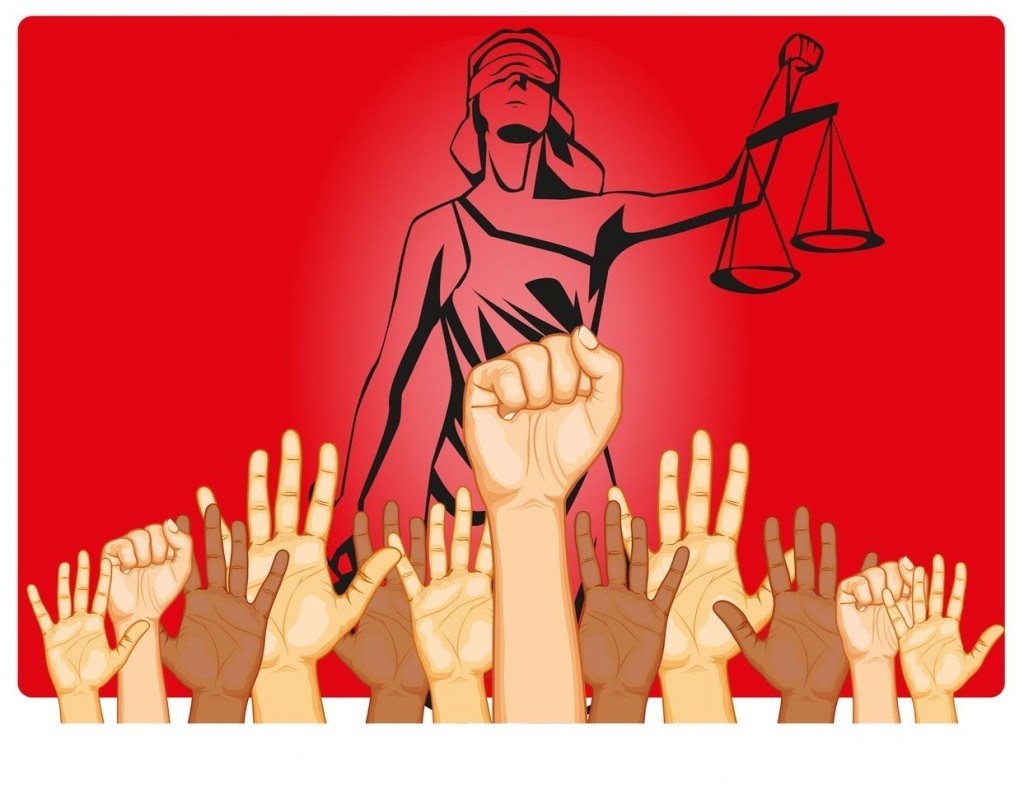 “Democratic transition” is a stage of transformation from dictatorial regimes to a democratic system, This stage includes a new formulation of all state institutions, civil society organizations, and other state institutions such as the educational institution, It also includes the formulation of a new constitution and new laws that can be developed in the future, Achieving all of this means initial success in establishing a democracy that can transform over time into a culture, even into a kind of instinct.
There were signs of a move towards democracy in this region in 2011, and it began in Tunisia and ended in Tunisia as well, No real movements towards democracy took place in the rest of the Arab countries, especially in Syria, where there was a beginning that lasted for a few months, until it was eliminated by armed religious factions, After that, the barbaric fighting continued, until it ended with the religious julanism that abolished even the word “democracy”, The longest fighting was in Syria and the worst results were also in Syria, In Syria, a criminal system was replaced by an even more criminal system, That is, working for democracy and its derivatives and appendages such as freedom and equality that abolish sectarianism led to the opposite, that is, to the exacerbation of the problem, The need for democracy became greater after the julanism, since the al julani with regard to freedom and equality is worse than Assadism by degrees.
It is necessary here to point out the difference between democratic transformation and democratic transition, Transformation is a cumulative process that ultimately leads to a gradual transition from dictatorship to democracy, while transition is not characterized by gradualism, meaning it is closer to a coup, which may be accompanied by disturbances and perhaps disputes between the new and old political elites, and may even lead to civil wars with potentially disastrous results.
Not all groups are qualified for democratic transition or transformation, The lack of qualification, as is the case with Arab Muslim societies, is due to many criteria, including, for example, the criterion of the lack of political and cultural awareness among the members of those groups, Arab groups are not qualified because they are afflicted with religious culture, which lacks a sense of national and earthly belonging, The homeland of the religious Muslim is religion, and there are no geographical boundaries to the homeland of the religious Muslim, who does not operate through elections that express the will of the people, but rather operates according to the will of God, who is responsible for appointing the ruler, and the people are not allowed to challenge God’s sovereignty!
Besides the concept of God, which hinders democracy, there are other forms of deification such as ethnicity, racism, tribalism, sectarianism, and tribalism, The reason some Arab Muslim groups are unfit for democracy—that is, for the state—is the lack of loyalty, national identity, and a concept of a land-based homeland among these groups, Then there is the concept of the ethnic or religious nation, even racism, such as the concept of the “best nation” and the concept of loyalty and disavowal, which does not allow for the establishment of a society within a state with borders, but rather a nation without recognized geographical boundaries, This, in turn, produces anarchy in an era that recognizes only state systems, which can consist of several different nations representing different cultures, Thus, the concept of a society distinguished by creative diversity clashes with the tendency toward homogeneity that religion seeks to impose, In other words, it is impossible to combine religion and state, as religion contradicts the foundations upon which the state is built, The concept of the state is severely confused among the Muslim Brotherhood, who apparently considered the Caliphate to be a state, It should be noted that the concept of the state was not known during the Caliphate, The Caliphate was a religious entity with the legitimacy of Sharia law, and it was not a state in the modern sense of the term. .
The Bedouin Arab groups, having failed to achieve complete state dominance, were plagued by the idea of a state within a state, as seen in Lebanon, Iraq, and elsewhere. A state within a state cannot survive without a military; therefore, these parallel states were keen to organize their own armies, capable of manipulating the state for their own purposes and extorting it when necessary. This deepened internal divisions, as the existence of these parallel states hinders the state from fulfilling its duties, effectively paralyzing it, The parallel state transforms the state into a colony, because the loyalty of its militias lies not with the state but with the leader of the parallel state, A parallel state cannot function as a political party, because a political party is bound by the law, while the militias of these parallel states are not bound by state law but by the customs of the parallel state, This leads to the fragmentation of the state, as is expected in Lebanon and Iraq, where Greater Lebanon will evolve into a smaller Lebanon, In Iraq, Kurdistan will become independent, and there will be a Sunni state and a Shiite state, Christians in Iraq do not want a state of their own; they want to emigrate, Of the two million Christians who remain in Iraq, approximately 250,000 Christians chose to emigrate to other countries; the situation in Lebanon is similar.
The convergence of tribalism and sectarianism with the parallel state, i.e., the mini-state, will inevitably lead to a civil war, which the Christians in Iraq do not want to wage. These are individual Christians who do not constitute a sect, because the concept of sect is always linked to a political goal, The Christians in Iraq and Syria do not have a political goal, and they do not possess what is called sectarian geography, meaning that they are distributed in the country in a random manner that does not resemble the distribution of the Druze, Alawites, and Kurds in Syria, nor does it resemble the distribution of the Sunnis, Shiites, and Kurds in Iraq.
Arab entities will fail to transform into states through democratic transition, as democracy is a condition of the state, Democracy is embodied in freedom and equality, which are neither known nor recognized by groups saturated with religion and religiosity, Religion does not recognize equality when it poses the question in the negative: “Are the believer equal to the disbeliever?” Inequality is self-evident to believers… there is no equality in marriage, blood money, paradise, or politics, These groups are primarily sick with their religion.
Some groups are afflicted with the illusion of democracy by witnessing practices such as sham elections with predetermined results, or by fear of the security apparatus and extremism in protecting the dictator by forming armies such as the so-called Assad Brigades, or eliminating civil society such as political parties, or bribing people with jobs with unlimited income, i.e. employing the bureaucracy in the service of formal democracy, or establishing huge projects devoid of benefit such as the nationalization of the Suez Canal in a showy manner, which was carried out by Lieutenant Colonel Abdel Nasser, knowing that the Suez Canal agreement was going to expire a few months after its nationalization was announced,Was there really any benefit from the Nile Dam or the Euphrates Dam? We cannot answer these questions because we do not have confirmed information, The invention of enemies and the promotion of the concept of conspiracy played a major role in misleading peoples and perpetuating their illusions.
The last point we want to mention briefly is the relative success of monarchies compared to republics, We thought that republics would outperform monarchies in leading and developing countries, but reality proved the opposite,Oil may be the reason! But we believe that the main reason was the hereditary legacy of the caliphate rooted in the Arab Bedouin consciousness, along with religion that prevents a person from rebelling against the ruler, then the practice of sexual gratification, and perhaps the transformation of armies into mercenaries to protect the king or prince, or all of these factors combined,In any case, we generally see that Bedouinism remained Bedouin and that the Arab masses are not qualified for democracy!
,
Post Views: 2